
Cretan mullein
Verbascum creticum Cav.
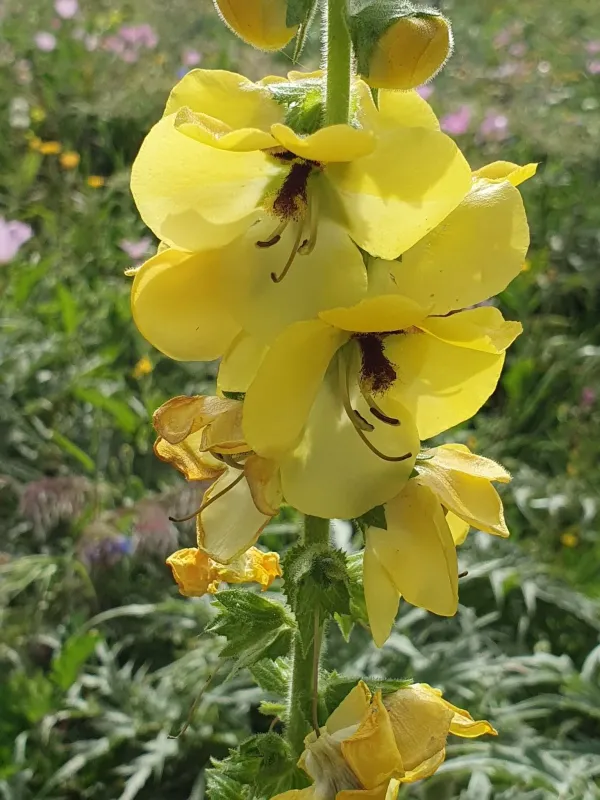
Description
Sowing dates
Sowing should take place in early spring when the soil temperature consistently stays above 12–15 degrees Celsius. Due to the tiny nature of the seeds, precise equipment calibration is necessary for uniform distribution.
Seeds should be sown at a shallow depth of approximately 1 centimeter. Covering them with a thin layer of soil is sufficient to ensure germination while allowing enough light exposure, which is critical for many Verbascum species.
Row spacing should be maintained between 45 and 60 centimeters to facilitate efficient weed control and allow for adequate airflow between individual plants, reducing the humidity levels that often lead to foliage diseases.
In regions with shorter growing seasons, starting the seeds in greenhouses and transplanting seedlings once frost risk has passed is a recommended strategy to ensure a more uniform crop establishment.
Initial thinning is essential after the emergence of the first true leaves. Maintaining an intra-row spacing of 25 centimeters minimizes intraspecific competition and promotes robust plant development.
Growing requirements
Cretan mullein (Verbascum creticum) is an herbaceous plant belonging to the Scrophulariaceae family. Native to the Mediterranean region, it has adapted to warm, sunny environments and is recognized for its architectural structure and botanical resilience.
The crop thrives in well-drained soils, preferring a neutral to slightly alkaline pH. It is highly intolerant of waterlogged conditions, as its roots are prone to decay if stagnant moisture persists around the base of the plant.
As a heliophilic species, it requires full sun exposure to maintain its growth rate and ensure proper secondary metabolite development. In shaded conditions, the plant is likely to exhibit elongated stems and a reduction in overall biomass.
Climatic requirements focus on warmth and stability. The plant demonstrates high drought tolerance once established, making it suitable for regions characterized by dry summers and Mediterranean-style climates.
Soil management should include ensuring a loose texture and adequate aeration. While the plant is not overly demanding of nutrients, regular phosphorus and potassium supplementation can enhance its flowering potential and overall structural integrity.
Main diseases and pests
Fungal pathogens such as powdery mildew are the most common threats to Cretan mullein. Symptoms usually appear as white, dusty spots on the foliage, often exacerbated by poor air circulation or overcrowding.
Rust diseases can also occur, characterized by pustules on the leaf surface. Management strategies involve applying copper-based or systemic fungicides during early symptoms to prevent the spread of the infection.
Insect pests, particularly various caterpillar species, can feed on the foliage and flower buds. Regular field scouting is necessary, especially during the vegetative growth phase, to determine if pest populations exceed economic thresholds.
Aphid colonies may develop on the tender apical parts of the plants, causing stunted growth and leaf curling. Integrated pest management, including the encouragement of beneficial insects, is highly recommended.
- Rotate crops to prevent the buildup of soil-borne pathogens.
- Remove infected plant tissue immediately upon detection.
- Improve soil drainage to mitigate the risk of root-related issues.