
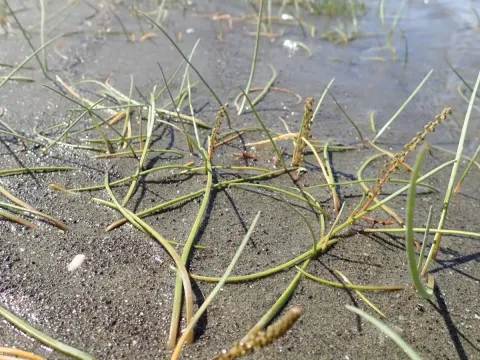
Arrowgrass
Triglochin
Arrowgrass (Triglochin) is not a conventional agricultural crop. In its natural environment, seeds are dispersed primarily by water, which facilitates their spread across marshes and wetlands.
What the section contains


Arrowgrass
Cultivation of Triglochin is rare and typically restricted to botanical research or ecological restoration projects. The seeds require a period of stratification to germinate successfully.
When attempting propagation, sowing should occur in late autumn to allow for natural cold treatment. Spring sowing requires mechanical scarification or chemical treatment to break seed dormancy.
The seeds must be kept in constant contact with moisture. A high water-holding capacity substrate, such as a mix of peat and sand, is necessary for optimal seedling development.
Growth is generally slow in the early stages. Seedlings are delicate and struggle against competition, requiring clean, weed-free environments during the establishment phase.
Arrowgrass belongs to the family Juncaginaceae. It is a perennial herbaceous plant adapted to extremely wet, sometimes saline, environments around the globe.
The plant is a typical halophyte and hydrophyte, preferring high soil moisture levels. It thrives in marshes, bogs, and along the saline margins of lakes and oceans.
Climatic requirements are relatively broad, but the plant performs best in temperate climates with high humidity. It is winter-hardy but sensitive to prolonged drought.
Soil requirements focus on high water retention and neutral to alkaline pH levels. Poor drainage is not an issue, as the root system is well-adapted to anaerobic conditions.
Full sun exposure is essential for photosynthesis. The plant does not survive in deep shade or under the dense canopy of other vegetation.
The primary concern regarding Arrowgrass in an agricultural context is its toxicity. The plant contains cyanogenic glycosides that can release cyanide upon digestion.
Livestock, particularly cattle and sheep, can suffer from fatal poisoning if they consume significant amounts of the plant, especially when it is fresh or stressed by weather.
There are no major insect pests that devastate Triglochin populations, largely due to its chemical defense mechanisms. It is generally resistant to common garden diseases.
Land development and drainage are the most significant threats to the species. Lowering water tables eliminates the specific micro-habitats necessary for its survival.
Competitive displacement by invasive wetland species poses a risk to native stands. Without specific site management, Triglochin is easily replaced by more vigorous grasses and sedges.