
Water Ribbons
Triglochin procera
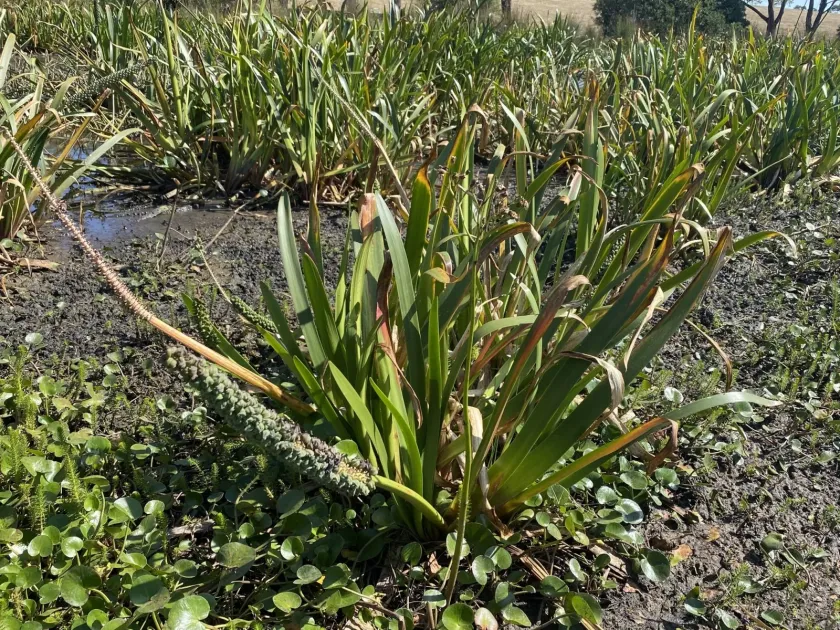
Description
Growing requirements
Water Ribbons (lat. Triglochin procera) belongs to the Juncaginaceae family. It is a perennial aquatic or semi-aquatic herb native to the wetlands of Australia, well-adapted to specific hydrological conditions.
The plant features a strong rhizome system, which allows it to thrive in still or slow-moving water bodies. Its foliage consists of long, ribbon-like leaves emerging from a central rosette, maximizing surface area for photosynthesis within the water column.
The species prefers a temperate climate with stable thermal conditions. Optimal growth is observed in shallow areas where the sediment is rich in organic matter, providing essential nutrients for rapid vegetative development.
Soil requirements focus on silty, well-aerated substrates with a neutral to slightly acidic pH level. The plant is sensitive to substrate drying, necessitating consistent water levels to maintain health and promote propagation.
Agricultural and commercial use of the species primarily focuses on phytoremediation of water bodies and landscaping of wetland areas. In some regions, it is studied for its potential as a sustainable source of biomass for specialized forage systems.
Main diseases and pests
Major threats to stands include phytopathogenic fungi that proliferate in stagnant water. The risk of root and rhizome rot increases significantly when water mineralization levels fluctuate, compromising the plant's natural defense mechanisms.
Common aquatic pests, including various mollusks and aquatic insects, can damage leaf tissues. Frequent phytosanitary monitoring and proper water management are essential to prevent significant loss of vegetative mass.