
Three-ribbed arrowgrass
Triglochin striata
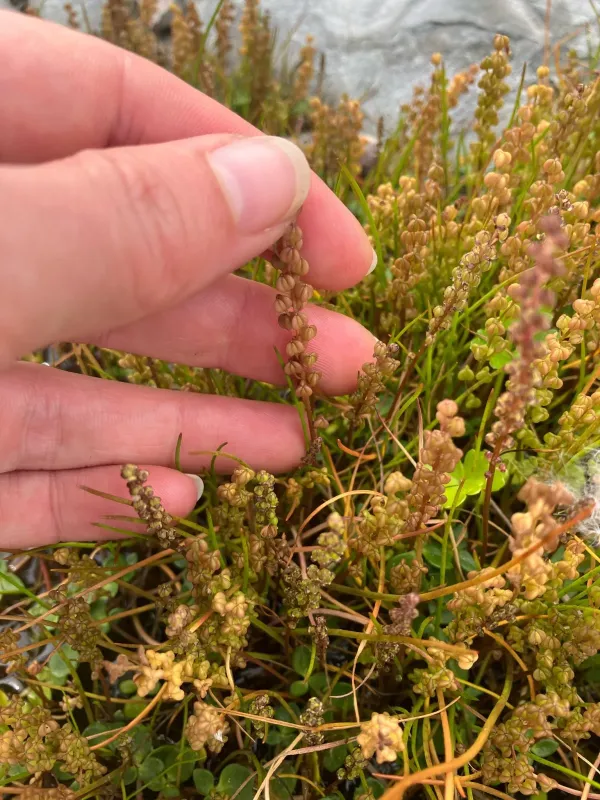
Description
Growing requirements
The three-ribbed arrowgrass (Triglochin striata) is a perennial herbaceous plant belonging to the Juncaginaceae family. It is a highly specialized halophyte, evolutionary adapted to thrive in saline and brackish soil conditions that are typically lethal to most standard agricultural crops.
Its natural distribution covers coastal salt marshes, tidal wetlands, and moist, saline meadows across various tropical and temperate regions worldwide. The plant exhibits remarkable resilience to periodic inundation and fluctuating water tables common in coastal ecosystems.
Botanically, the plant features narrow, linear leaves arranged in a basal rosette, originating from a short, creeping rhizome. This architecture allows the plant to minimize water loss while maintaining efficient nutrient uptake in harsh, saline environments.
Optimal growth requires consistent soil moisture and high mineral content. The species is highly photophilous, demanding full sun exposure to maintain its vegetative vigor and to prevent the encroachment of taller, shade-casting plant competitors.
In terms of agricultural utility, Triglochin striata serves primarily as a valuable fodder resource in saline pasture lands where traditional grazing grasses fail to establish. It is also an important indicator species for monitoring the health of fragile coastal salt marsh environments.