
Sea arrowgrass
Triglochin maritima
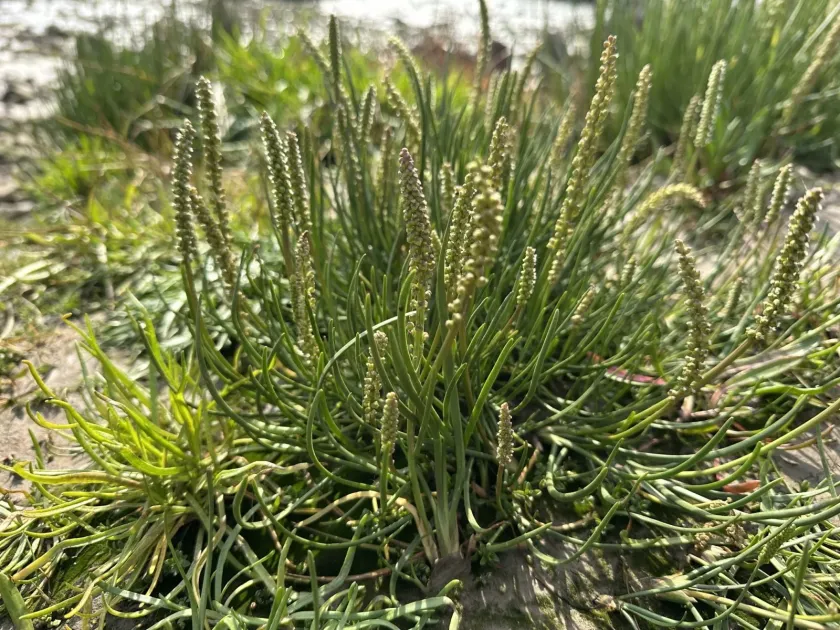
Description
Growing requirements
Sea arrowgrass (Triglochin maritima) is a perennial herbaceous plant belonging to the Juncaginaceae family. It is a resilient halophyte, uniquely adapted to survive and thrive in high-salinity soils such as salt marshes and coastal meadows.
The plant originates from the northern hemisphere, where it is found in saline coastal habitats. Its ability to tolerate high osmotic stress makes it a key species in reclaimed saline soils where conventional agricultural crops cannot survive.
Botanically, it features fleshy, linear, grass-like leaves growing from a dense rootstock. The plant possesses specialized mechanisms for salt excretion, allowing it to maintain metabolic functions in environments that are toxic to most other flora.
Ideal conditions for sea arrowgrass include full sunlight and consistently moist, saline soils. It is highly resistant to tidal flooding and periodic waterlogging, which helps prevent soil erosion in sensitive coastal environments.
In agricultural practice, sea arrowgrass is primarily utilized as grazing forage. It offers significant nutritional value, especially in its early growth stages, making it a valuable resource for livestock grazing in marshlands and coastal pastures.
Main diseases and pests
Sea arrowgrass exhibits a remarkable natural resistance to common fungal and bacterial diseases. Its saline environment generally inhibits the growth of pathogens that typically affect standard agricultural crops.
Insect pests are generally limited to those specialized in consuming halophytic vegetation. Under natural conditions, these populations rarely reach levels that would cause significant economic damage to the plant biomass.
The primary threat to the stability of sea arrowgrass populations is soil desalinization caused by human-induced land drainage and water diversion projects. When salinity levels drop, the plant quickly loses its competitive advantage.
Invasion by non-salt-tolerant weeds is a significant concern once the ecological balance of the salt marsh is disrupted. These invasive species often outcompete the slower-growing arrowgrass.
Overgrazing in fragile habitats can lead to the depletion of rootstocks. Because the plant relies on specific hydric conditions for reproduction, recovering from intensive grazing pressure can be a slow process.