
Marsh arrowgrass
Triglochin palustris
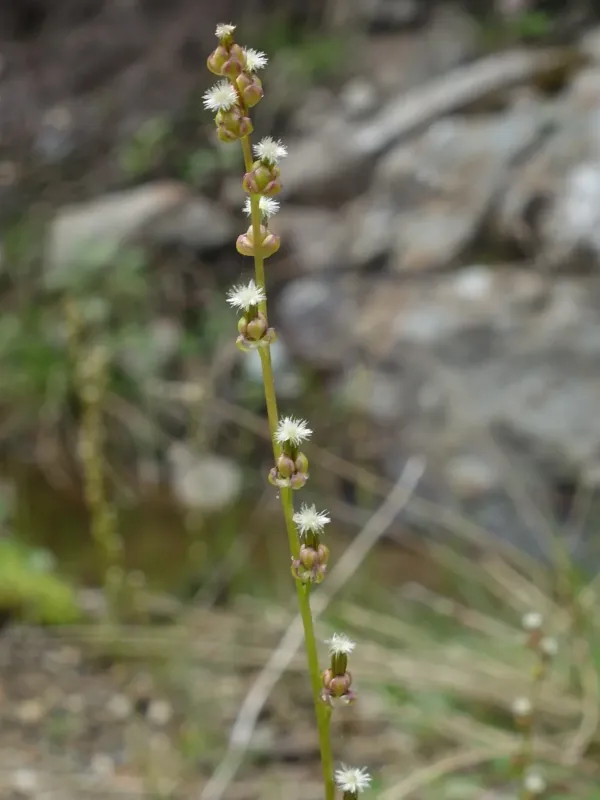
Description
Growing requirements
Marsh arrowgrass (Triglochin palustris) is a perennial herbaceous plant belonging to the Juncaginaceae family. In agricultural terms, it is recognized as a typical component of natural wetland meadows and pasture ecosystems rather than a commercial crop.
The plant exhibits a strong preference for high-moisture environments. It is commonly found in damp meadows, marshes, and along the edges of ponds or lakes where water saturation is consistent throughout the growing season.
Regarding soil requirements, it thrives in rich, moist soils including peat or silt loams. It displays a notable tolerance for saline conditions, allowing it to colonize brackish marshlands where few other forage plants can survive.
The distribution of this species covers a wide range across the Northern Hemisphere. It plays an important ecological role by stabilizing the soil in areas prone to seasonal flooding, making it a valuable species for wetland conservation.
Economically, it is used as a minor component of natural forage. However, it must be managed carefully as the plant can accumulate cyanogenic glycosides, which may pose a risk to livestock if ingested in large quantities during specific growth stages.
Main diseases and pests
The primary threat to Marsh arrowgrass populations is drainage and land reclamation. As an obligate wetland species, any significant reduction in water tables leads to its rapid decline and replacement by more competitive upland grasses.
Common diseases affecting this plant are rarely documented as they do not threaten commercial production. However, like many hydrophytes, it can be susceptible to foliage-attacking fungi in environments with poor air circulation.
Pests typical of meadow habitats, such as specific aphids or leaf-feeding insects, may occasionally infest the plant. These interactions are generally considered minor and do not usually require any control measures.
Competition from invasive species or more vigorous grasses in less saturated soils represents a challenge to the persistence of Marsh arrowgrass. It relies on its specialization in wet, low-oxygen soils to outcompete other plants.
Effective management in pasture settings involves monitoring the botanical composition of the meadow to ensure that the density of Marsh arrowgrass does not become excessive, thereby preventing potential poisoning issues for grazing animals.