
Mastichina thyme
Thymus mastichina (L.) L.
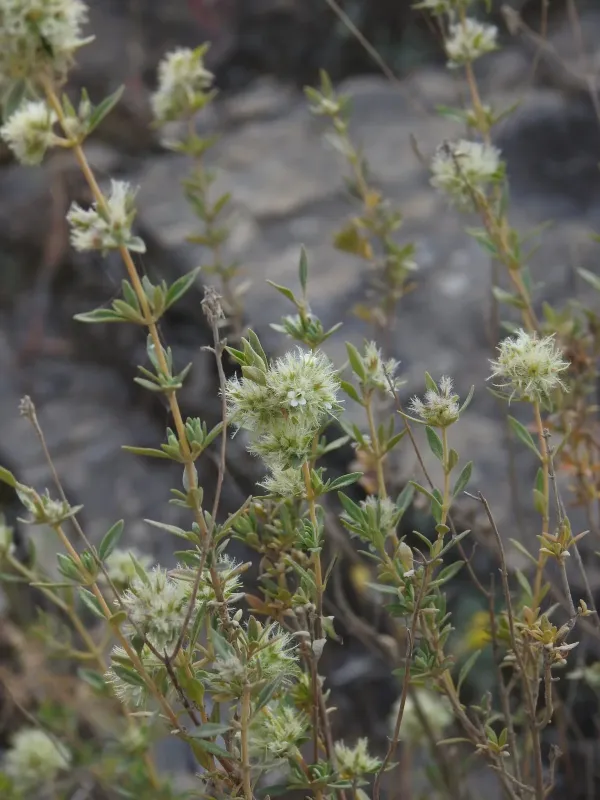
Description
Sowing dates
Mastichina thyme is a perennial subshrub belonging to the Lamiaceae family. In industrial farming, seeds are sown in open fields during spring once soil temperatures reach 10-12 degrees Celsius, or seedlings are raised in greenhouses for better uniformity.
When sowing directly in the field, a row planting method is utilized with inter-row spacing of 50-60 centimeters. The seeding depth should be shallow, about 0.5–1 centimeter, as the seeds are extremely small and sensitive to soil crusting.
Maintaining optimal plant density is crucial for plantation management. Excessive crowding restricts air circulation, which frequently leads to the development of fungal pathogens near the base of the plant.
Seed germination is relatively slow, necessitating rigorous weed control in the early growth stages to ensure the young seedlings are not outcompeted for nutrients and sunlight.
The crop demonstrates excellent regenerative properties, allowing for the sustainable use of a plantation for 5–7 years before productivity starts to decline significantly.
Growing requirements
Native to the Iberian Peninsula, Mastichina thyme is a sun-loving species that demands high light intensity. It is a drought-tolerant plant that thrives best in open, well-exposed locations without any shading.
Soil requirements include light, well-draining textures with a neutral to slightly alkaline pH. The plant is highly sensitive to waterlogging and performs poorly in heavy, compacted clay soils that retain excess moisture.
Effective drainage is essential in industrial cultivation, as prolonged exposure to wet roots will cause rapid decay of the root system and plant loss. Proper land preparation prior to planting is vital.
While moderately cold-tolerant, the crop requires protection or mulching with organic material in regions with severe winters to prevent frost damage to the root zone.
Irrigation should be managed carefully. During dry periods, the plant relies on its deep taproot system, but supplemental irrigation is recommended during critical growth stages to maximize biomass yield.
Yield
The yield of Mastichina thyme depends on regional climate, plantation age, and harvest technology. With proper agronomic management, farmers can expect a yield of 3 to 6 tons of green mass per hectare.
The primary value lies in the essential oil, which typically constitutes 1.5–2.5 percent of the dry weight. Its unique chemical profile, rich in 1,8-cineole, makes it a valuable commodity for the pharmaceutical and cosmetic industries.
Regular pruning of the bushes is recommended to enhance yield, as this practice stimulates new vegetative growth and prevents the stems from becoming excessively woody over time.
The maximum biological potential is reached by the second or third year post-planting. Subsequent years require consistent nutrient management to maintain high output levels.
Global demand for this specific essential oil is driven by the fragrance and food processing sectors, presenting a lucrative niche for agricultural businesses in arid climates.
Main diseases and pests
The primary threats to this crop in humid conditions are root rots caused by soil-borne fungi such as Fusarium and Rhizoctonia. Infections manifest as sudden wilting that can spread quickly across the field.
Pests such as leaf-eating caterpillars and noctuid larvae can cause significant damage to the foliage, thereby reducing both biomass weight and essential oil quality.
Spider mite infestations may occur under greenhouse conditions or during periods of extreme heat, necessitating proactive monitoring and localized control measures.
Agronomists emphasize the importance of crop rotation to mitigate disease risks, strictly advising against planting thyme in plots previously occupied by other Lamiaceae species.
Biological control methods are preferred, as maintaining an eco-friendly production standard is essential for the high-end cosmetic and medicinal markets.
Harvesting
Harvesting of Mastichina thyme should take place during full bloom when the essential oil content in the aerial parts is at its peak. This typically occurs between June and July, depending on the latitude.
Specialized harvesting equipment is used to cut the green mass at a height of 5–10 centimeters from the ground, ensuring enough material remains for rapid recovery and regrowth.
The harvested material must be transported to processing facilities immediately, as the risk of self-heating in dense piles is high, leading to the degradation of volatile aromatic compounds.
Drying is performed in controlled-atmosphere dryers at temperatures not exceeding 40 degrees Celsius to preserve the therapeutic properties and quality of the finished product.
Post-drying, a threshing process is applied to separate the leaves and flowers from the coarse stems, resulting in a refined raw product ready for distillation or commercial sale.