
Caraway thyme
Thymus herba-barona Loisel.
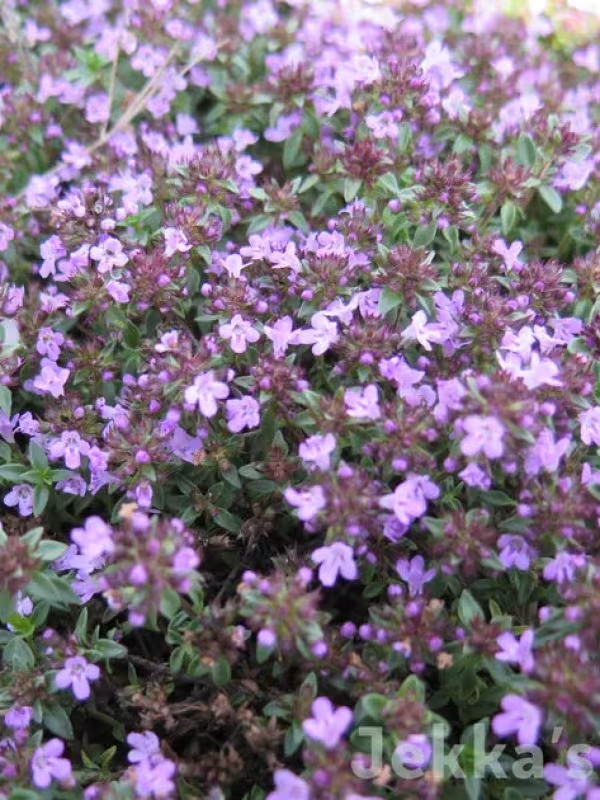
Description
Sowing dates
Sowing caraway thyme seeds is typically performed in spring once soil temperatures reach 15-18 degrees Celsius. For seedling production, seeds are sown in trays filled with light sandy substrate in late March or early April, ensuring they are placed on the surface without deep burial.
In outdoor conditions, the crop is better propagated vegetatively by dividing clumps or taking cuttings. Cuttings are taken in early summer and planted in moistened soil to root, allowing for faster production of full-fledged planting material while maintaining cultivar traits.
Planting schemes must consider the plant's ability to spread horizontally, so a spacing of at least 25-30 centimeters between plants should be maintained. Dense planting can lead to poor ventilation, which negatively affects the health of this essential oil-bearing plant.
Before sowing, it is recommended to stratify seeds for several weeks to improve germination rates. This promotes more uniform sprouting and ensures consistent seedling emergence, which requires moderate watering and plenty of light.
When transplanting into the ground, it is vital to provide drainage, as young plants are prone to root rot from waterlogging. Caraway thyme prefers dry areas with good sun exposure, where moisture stagnation is avoided during the autumn-winter period.
Growing requirements
Caraway thyme is a low-growing perennial of the Lamiaceae family, native to Corsica and Sardinia. It forms dense, flat mats of small leaves that possess a distinct caraway scent, which inspired its specific botanical name.
The crop is highly light-demanding and prefers open, well-warmed sunny spots. In shade, the plant becomes leggy, loses its density, and becomes less aromatic, as the production of essential oils depends directly on the intensity of photosynthesis.
Soil preferences include well-drained, calcareous, or neutral soils with low organic content. Heavy clay soils are fatal to caraway thyme, as they retain water, often leading to root decay during winter months.
The plant has high drought tolerance and does not tolerate excessive moisture, requiring regular watering only during the active growth stage. Mature specimens are capable of surviving long dry spells without losing their decorative appeal.
Temperature conditions should be moderately warm, though the plant tolerates brief frosts when snow cover is present. In regions with harsh winters, a light covering of spruce branches is recommended to protect the root system from freezing.
Yield
The yield of green matter for caraway thyme depends on the plantation's age and the agronomic environment. In commercial settings, harvesting is conducted during the period of mass flowering, when the concentration of essential oils in the leaves reaches its maximum.
Average yields of dry raw material range from 0.5 to 1.5 tons per hectare when proper plant density is maintained. An important quality indicator is the essential oil, which in this cultivar contains significant amounts of carvacrol and thymol.
To increase marketable output, regular pruning of the bushes is necessary, which stimulates the growth of new vegetative shoots. However, no more than one-third of the green mass should be cut at once to avoid exhausting the plant's root system.
After harvesting, the material is dried in well-ventilated, shaded rooms at temperatures not exceeding 35 degrees Celsius. This allows for maximum preservation of the volatile aromatic components that give the herb its unique caraway-like quality.
The frequency of harvesting can be up to twice per season under favorable climatic conditions. Well-maintained plantings retain productivity in one location for 4-5 years, after which rejuvenation or transplantation to a new plot is required.
Main diseases and pests
The primary threat to caraway thyme is root rot caused by soil waterlogging. The disease manifests as darkening at the base of the stems and wilting, which requires immediate removal of affected plants and improvement of soil drainage.
Poor ventilation in crowded plantings often leads to powdery mildew. A white coating on the leaves significantly reduces the crop's market value and requires the use of appropriate biological fungicides or sulfur treatment.
Among pests, aphids and spider mites pose the greatest danger, as they suck sap from young tips. When colonies are detected, it is recommended to use soap solutions or insecticidal herb infusions, avoiding harsh chemicals to maintain culinary safety.
Nematodes can also attack the root system in areas with stagnant water, causing stunted growth and twisted shoots. Prevention involves crop rotation and avoiding planting herbs after crops susceptible to similar infestations.
Excessive application of nitrogen fertilizers triggers rapid growth of green mass but softens plant tissues, making them more vulnerable to sucking insects. Moderate doses of mineral fertilizers focusing on potassium and phosphorus are recommended to strengthen stems.
Harvesting
Harvesting of caraway thyme begins when plants enter the full flowering phase, as this is when the concentration of aromatic compounds is optimal. Cutting is done with sharp scissors, leaving 5-10 centimeters above the ground.
For culinary purposes, shoots can be gathered throughout the growing season, using young leaves and twigs. It is important to harvest in dry, sunny weather after the dew has evaporated to prevent mold during the subsequent drying process.
After cutting, the material is tied into bundles or spread in thin layers on shelves. Drying must be slow and uniform, away from direct sunlight, so that the essential oils do not evaporate but remain within the leaf structure.
Finished raw material should have a characteristic strong scent resembling caraway and maintain its color. Once fully dried, leaves are separated from woody stems, which have less aromatic value and are often discarded or used as mulch.
Storage of dried thyme is performed in glass or ceramic containers with tight lids in a cool, dark place. Under these conditions, the product retains its flavor and aromatic properties for 1-2 years, remaining suitable for sauces and baking.