
Daurian thyme
Thymus quinquecostatus Čelak.
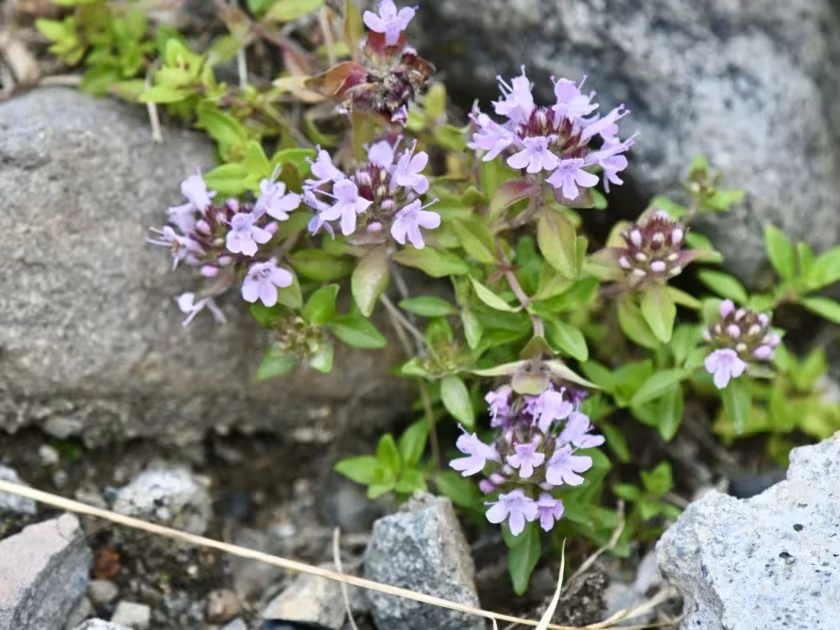
Description
Sowing dates
Sowing of Daurian thyme (Thymus quinquecostatus Čelak.) is carried out mainly by seeds or by vegetative division of the bush. Seeds are sown in open ground in spring when the soil warms up to 10-12 degrees, or before winter for natural stratification.
To obtain a high germination rate, seeds are planted at a shallow depth of no more than 0.5 cm, as they are very small. It is recommended to use the seedling method to ensure more stable development of young plants during their first year of life.
When sowing in rows, a spacing of 45-60 cm is left between them. This is necessary to ensure light access and to facilitate high-quality mechanical processing of inter-row spaces to remove weeds.
Seedlings appear 14-20 days after sowing. During this period, it is critically important to maintain optimal moisture in the topsoil, preventing the formation of a dense soil crust.
Thinning of seedlings is performed at the stage of two or three true leaves, leaving a distance of 15 to 25 cm between plants in a row, depending on soil fertility and cultivation goals.
Growing requirements
Daurian thyme is a light-loving plant of the Lamiaceae family, so open, well-lit areas without shading from trees or buildings are chosen for planting. It thrives in regions with significant sunshine exposure.
The crop prefers light, well-drained sandy or loamy soils with a neutral or slightly alkaline pH. In heavy clay soils with waterlogging, the root system quickly rots and dies back due to lack of oxygen.
The plant possesses high frost resistance and is capable of surviving the severe climatic conditions typical of its natural habitat, which spans the Russian Far East, Eastern Siberia, Mongolia, and Japan.
Agrotechnology includes moderate watering during dry periods, although thyme tolerates moisture deficits much better than excessive wetness. Water stagnation is a fatal factor for this specific species.
Fertilizer application should be balanced. Excessive use of nitrogen fertilizers reduces the concentration of essential oils in the biomass, so preference is given to potassium-phosphorus compounds in moderate doses.
Yield
The yield of Daurian thyme biomass directly depends on the age of the plantation and the agronomic background. Maximum productivity is observed during the 3rd and 4th years of growth, after which a gradual decline in raw material volume may occur.
On average, per hectare, when cultivation technology is followed, it is possible to harvest between 2 and 5 tons of dried aerial plant parts. Yield indicators also depend on the number of cuts per season.
The essential oil content is an important indicator of raw material quality. To achieve maximum output of valuable substances, harvesting is conducted during the mass flowering phase, when component concentration reaches its peak.
Regular pruning of spent flower stalks stimulates bushiness and the growth of new vegetative organs. With proper care, a plantation can be effectively operated on the same site for 5-6 years without losing commercial value.
Subsequent drying of the raw material is carried out in well-ventilated rooms or dryers at temperatures not exceeding 35-40 degrees, which allows for the maximum preservation of biologically active compounds.
Main diseases and pests
The main threats to Daurian thyme are fungal diseases that develop when moisture regimes are disrupted. Root rot is the most dangerous pathology occurring in waterlogged areas, leading to rapid plant decline.
Powdery mildew can infect the foliage during periods of high air humidity and lack of air circulation. To combat this, timely thinning of plantings and maintaining optimal planting density are necessary.
Among pests, weevils cause the most damage to plantations by attacking stems and buds, while various aphid species suck juices from young shoots, weakening the plant's overall immune system.
Nematodes may attack the root system, leading to stunted growth and yellowing of the above-ground parts. As a preventive measure, crop rotation and the use of healthy, certified planting material are recommended.
Disease and pest management are based on agronomic methods. The use of pesticides on medicinal plantations is limited, so preference is given to biological control agents and sanitary culling of infected individuals.
Harvesting
Harvesting of Daurian thyme is conducted during the full flowering period when essential oil content is at its maximum. Usually, this timing falls in mid-to-late summer, depending on the climatic zone.
Raw material collection is performed by mowing the aerial part at a height of 5-10 cm from the soil surface. It is important not to damage the woody parts of the stem to ensure rapid subsequent regrowth.
For commercial use, the apical parts of the shoots, measuring 15-20 cm with flowers and leaves, are most commonly used. It is in these parts that the primary concentration of beneficial terpenoids and phenols is found.
During harvest, it is vital to avoid contamination with weeds, soil, and foreign impurities. The quality of raw material is checked by the intensity of the aroma and the preservation of the natural leaf color after drying.
After mowing, the material must be immediately sent for primary processing or drying to prevent self-heating processes, which lead to the degradation of valuable components and spoilage of commercial appearance.