
Thelocactus mirandus
Thelocactus mirandus
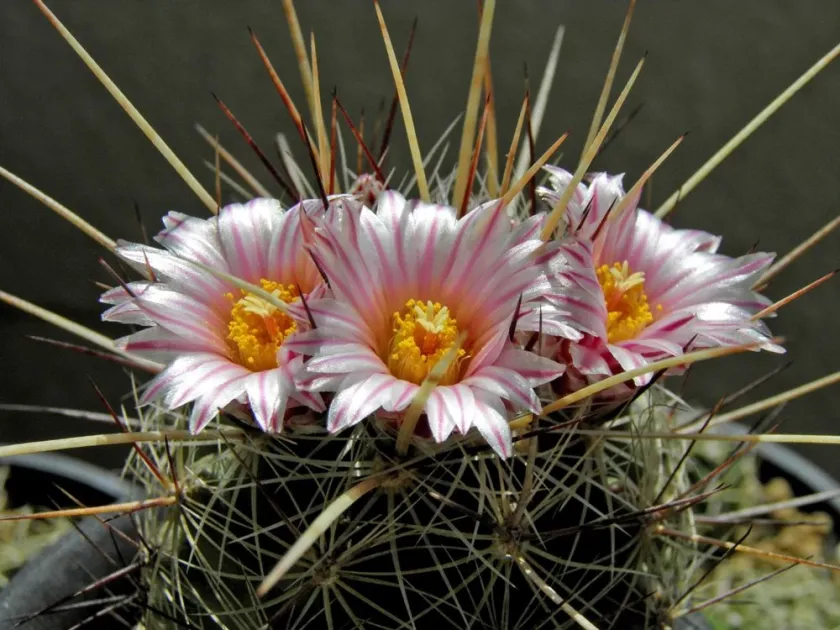
Description
Sowing dates
Sowing Thelocactus mirandus seeds is best performed in early spring to utilize the increasing natural light levels required for healthy germination.
The substrate must be highly porous, typically composed of a mixture of fine gravel, coarse sand, and a small percentage of sterile potting soil.
Seeds should be sown on top of the prepared, lightly moistened soil and pressed down gently to ensure firm contact without burying them.
Cover the seed trays with clear plastic or glass to maintain consistent high humidity until the majority of seeds have successfully germinated.
Once seedlings emerge, introduce fresh air gradually to acclimatize the young plants, which helps to promote stronger, more resilient growth.
Growing requirements
As a member of the Cactaceae family, this species requires a location with maximum exposure to bright, filtered light to maintain its compact form.
The soil requirements focus on drainage; using a specialized cactus mix with excellent aeration prevents the buildup of moisture around the roots.
During the growing season, watering should only occur once the substrate is completely dry, preventing the roots from staying saturated for long.
Winter dormancy is essential for this plant, requiring a dry, cool environment to simulate the natural climatic conditions of its habitat.
Providing sufficient spacing and proper air circulation prevents the accumulation of heat and moisture, which are critical for the plant's health.
Main diseases and pests
The primary threat to Thelocactus mirandus is rot caused by poor soil drainage and incorrect watering schedules during cooler periods.
Mealybugs are a common pest that may infest the plant, hiding in the crevices between the tubercles and the crown of the cactus.
Spider mites can also become a problem in excessively dry and stagnant air, causing discoloration and damage to the plant epidermis.
Effective pest control involves the application of appropriate systemic insecticides and maintaining a clean growing environment to deter infestations.
Proactive care involves inspecting the root system and stem periodically, as early detection of rot or pests significantly increases recovery chances.