
Thelocactus macdowellii
Thelocactus macdowellii
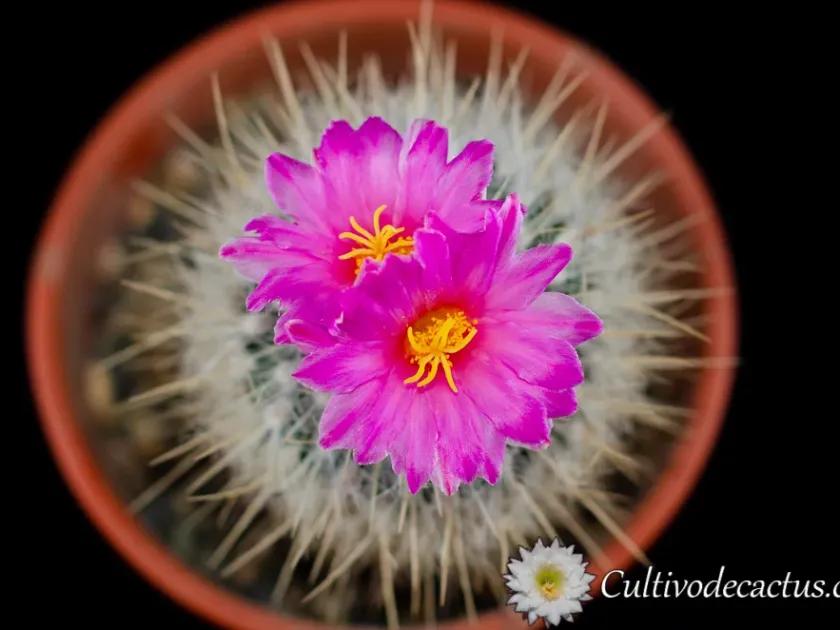
Description
Sowing dates
Sowing Thelocactus macdowellii seeds should be performed during the spring months, specifically March or April, to align with the start of the active growth phase and longer daylight hours.
Use a sterile, well-draining substrate composed primarily of coarse sand and finely sieved compost. Place the seeds on the soil surface, gently pressing them down without burying them completely under the soil.
Cover the sowing containers with transparent glass or plastic wrap to maintain high humidity levels essential for germination. Keep the temperature consistently between 22 and 26 degrees Celsius.
Once seedlings emerge, introduce gradual ventilation to prevent "damping off" disease. Seedlings are very fragile and require diffused, soft light during their first few months of development.
Transplanting (pricking out) should only occur after the seedlings have developed their first true spines and have reached a sufficient size to handle being moved into individual pots, usually after one year.
Growing requirements
Thelocactus macdowellii is a distinct member of the Cactaceae family, native to the arid limestone regions of Mexico. This plant is highly adapted to intense sunlight and limited water availability throughout its lifecycle.
Cultivation success relies heavily on providing direct sunlight for most of the day. Without sufficient light, the plant's natural, compact, and spine-covered appearance will suffer, resulting in etiolation.
The potting medium must be inorganic-rich. A mixture of 50% coarse mineral grit, pumice, or gravel and 50% professional cactus potting soil is ideal for ensuring that water drains away from the roots instantly.
Watering must be strictly regulated: soak the soil thoroughly, then allow it to dry out completely for several days before the next watering session. Never allow the plant to sit in standing water.
During the winter months, the plant requires a dormant period with almost zero moisture and cooler temperatures. This mimics the environmental stress needed to trigger blooming in the following spring season.
Main diseases and pests
Spider mites are the most common pest for this species, especially in environments with poor air circulation and low humidity. They feed on the sap and can quickly cause unsightly scarring on the cactus body.
Root mealybugs pose a significant threat because they remain hidden within the root zone. Their presence is often identified by stunted growth and the appearance of white, cotton-like masses when checking the roots during repotting.
Fungal rots are typically caused by overwatering or poor soil drainage. When the base of the cactus becomes soft or discolored, it is a sign of rot that requires immediate surgical removal and drying.
Preventative measures include using systemic insecticides and fungicides, though strictly following product guidelines is essential to prevent chemical burns on the sensitive epidermis of the cactus.
- Perform monthly inspections for early signs of pest infestation.
- Avoid using organic-heavy soil which retains too much moisture.
- Ensure the growing area has a steady flow of fresh, non-stagnant air.