
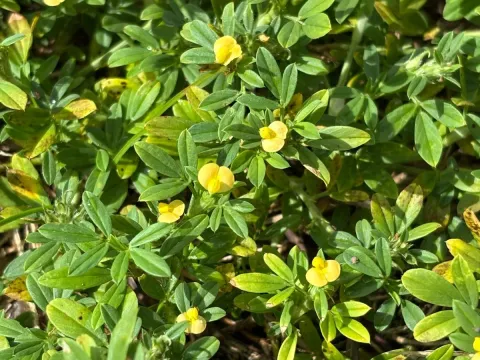
Stylosanthes
Stylosanthes
Stylosanthes is a perennial leguminous crop that is typically sown at the beginning of the rainy season to ensure optimal germination and early growth of the seedlings.
What the section contains


Stylosanthes
Land preparation is essential; the field must be cleared of weeds and debris because the plant is a slow starter and struggles against competition in its early development.
The seeds should be planted at a shallow depth of 0.5 to 1.5 centimeters, allowing for adequate soil-to-seed contact while ensuring sufficient moisture for emergence.
Inoculation with appropriate Rhizobium strains is highly recommended to promote effective nitrogen fixation, which significantly boosts the plant's biomass production.
The optimal seeding rate typically ranges from 3 to 6 kilograms per hectare, depending on the chosen method of planting, whether by drill or broadcasting.
Belonging to the Fabaceae family, Stylosanthes is widely recognized for its exceptional ability to thrive on acidic and low-fertility soils where other legumes fail.
It prefers well-drained soils, although it exhibits a remarkable tolerance to waterlogging and can endure conditions that would typically stress other pasture species.
As a tropical crop, it requires average temperatures between 20 and 30 degrees Celsius and is extremely sensitive to frost, which limits its range to warmer regions.
The plant is highly drought-tolerant, possessing deep root systems that allow it to remain productive during extended dry periods, making it an ideal choice for tropical savannas.
It responds positively to phosphorus fertilization, which is the most limiting nutrient in tropical soils and is crucial for robust root development and high forage quality.
Stylosanthes is a high-yielding forage crop, capable of producing 20 to 40 tons of green matter per hectare, which provides substantial nutritional value for livestock.
In terms of dry matter, farmers can expect yields ranging from 5 to 10 tons per hectare annually, depending on rainfall distribution and proper pasture management.
When used for grazing, it enhances the growth rates of cattle by providing a high-protein supplement that maintains its nutritive quality even in mature plants.
Careful pasture management is required; rotational grazing is preferred to prevent overgrazing, which can degrade the stand and reduce its long-term persistence.
The plant acts as a beneficial soil improver, with its decomposing residues adding nitrogen back into the soil, thereby benefiting subsequent crops in the rotation.
Anthracnose, caused by the fungus Colletotrichum gloeosporioides, remains the most significant disease affecting Stylosanthes, often leading to severe stand decline.
Disease management strategies focus on breeding for resistance and avoiding high humidity conditions that favor the spread of fungal spores across the field.
Pests such as stem borers and various leaf-eating caterpillars can damage the plant's structural integrity and reproductive parts, directly reducing seed yields.
Integrated pest management (IPM) is crucial, combining chemical controls with cultural practices such as clearing debris and selecting resilient cultivars for cultivation.
- Use certified disease-free seeds.
- Implement proper spacing to improve airflow.
- Monitor for early signs of fungal lesions.
For high-quality hay, Stylosanthes should be harvested during the peak flowering stage to ensure the highest concentration of proteins and minerals in the biomass.
When harvesting for seeds, the process must be carefully timed because the pods mature unevenly; cutting should commence when the majority of pods turn brown.
Mechanical harvesting requires adjustment of combines to minimize seed loss, given the fragile nature of the pods and their tendency to shatter when over-dried.
Post-harvest management involves drying the forage in thin layers to prevent mold development, ensuring that the nutrient profile remains stable during storage.
The resulting hay or seed harvest serves as a cornerstone for local livestock feed security, particularly during seasons when grass growth is significantly limited.