
Stylosanthes fruticosa
Stylosanthes fruticosa
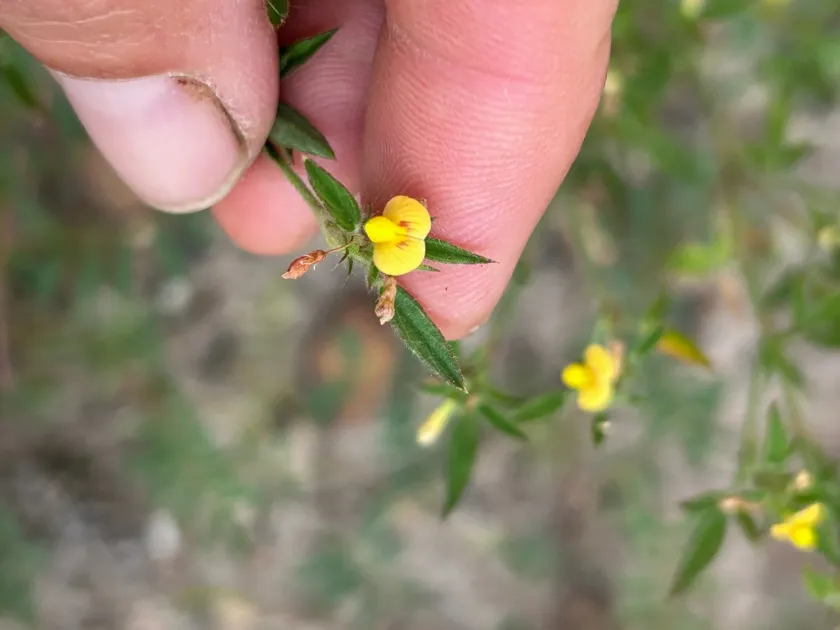
Description
Sowing dates
Sowing of Stylosanthes fruticosa is typically scheduled for the beginning of the rainy season, when soil moisture is optimal for germination. The soil temperature should be consistently above 20°C to ensure uniform establishment.
Seed scarification is highly recommended prior to planting to break the seed coat dormancy. Proper preparation significantly improves field emergence rates and reduces the time to initial establishment.
The optimal planting depth is between 1 and 2 centimeters. Due to the small size of the seeds, shallow placement is critical to prevent exhaustion of energy reserves before the seedling reaches the surface.
Seeding rates vary depending on the intended use, ranging from 3 to 6 kilograms per hectare. Proper spacing ensures that the plants develop sufficient canopy cover to compete with weeds in early stages.
Using a row-seeding method with intervals of 30–50 cm is often preferred, as it allows for easier management and better access for nutrients and water in the early vegetative phase.
Growing requirements
Stylosanthes fruticosa, a member of the Fabaceae family, is a perennial subshrub native to tropical regions. It is highly valued for its adaptability to diverse environmental conditions, including poor soils.
The plant thrives in well-drained soils, including sandy and acidic profiles where other crops might struggle. It is remarkably drought-tolerant, utilizing a deep root system to access water during dry seasons.
It prefers sunny environments and does not tolerate heavy shade, which can significantly stunt growth. Excessive waterlogging, however, is detrimental and should be avoided to prevent root damage.
As a legume, it fixes atmospheric nitrogen through symbiotic associations with rhizobia, effectively improving soil fertility. This makes it an excellent choice for sustainable pasture management programs.
With an annual rainfall requirement as low as 500 mm, it is a resilient species for arid and semi-arid zones. It manages to survive extended dry periods by shedding leaves to minimize water loss.
Yield
The biomass yield of Stylosanthes fruticosa depends on soil fertility and management practices, generally producing 5–10 tons of dry matter per hectare. It serves as a high-quality protein source for livestock.
The forage provides high crude protein content, often ranging from 15% to 18%, which is crucial for maintaining cattle health during periods when quality grass is unavailable. It is a vital supplement.
Rotational grazing is essential to prevent overgrazing, which could deplete the plant population. If managed correctly, the plant recovers quickly after grazing or harvesting during active growth periods.
Seed production requires careful monitoring because maturation occurs over a prolonged period. Efficient harvesting techniques are necessary to mitigate seed loss during the ripening phase.
Phosphorus supplementation can significantly boost the overall biomass production, particularly in low-fertility soils. This practice enhances root development and promotes faster regrowth cycles.
Main diseases and pests
Anthracnose, caused by fungi of the genus Colletotrichum, is the most significant disease affecting Stylosanthes fruticosa. It can cause severe defoliation and death of stems if left unchecked.
Insects like weevils and various lepidopteran larvae can pose threats to reproductive parts, significantly reducing seed viability and total yield. Regular field inspections are necessary for management.
Root rot becomes a major issue in poorly drained soils where water stagnation occurs. These conditions favor fungal proliferation and weaken the plant's structural integrity over time.
Weed competition is a critical challenge during the first months of life. Once established, however, the plant’s deep rooting system allows it to dominate most associated weeds effectively.
Integrated disease management strategies, including the use of resistant varieties and careful grazing management, are the best methods to maintain a healthy and productive stand for multiple seasons.
Harvesting
Harvesting for fodder should occur before the stems become overly lignified, ensuring the highest nutrient quality. Cutting at a height of 10–15 cm ensures that the plant regrows efficiently.
Seed harvesting is often done through multiple passes or manual collection due to the non-uniform ripening of the pods. Early collection helps to avoid losses from spontaneous pod shedding.
After collection, seeds must be dried thoroughly in the shade. Improper storage conditions, especially high humidity, can lead to mold development and cause a rapid loss of germination potential.
In grazing systems, the animals perform the harvesting. Proper stocking rates ensure that the plants are not grazed down to the crown, allowing for consistent productivity year after year.
When producing hay, careful handling is necessary to keep the protein-rich leaves attached to the stems. Minimizing mechanical agitation during drying preserves the feed value of the crop.