
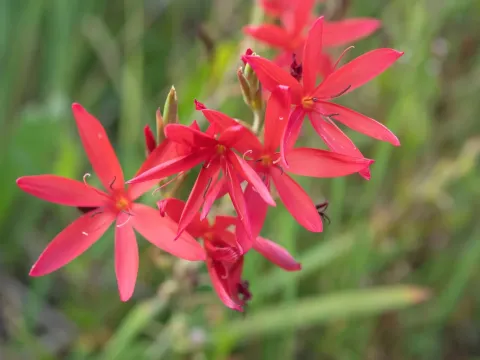
Schizostylis
Schizostylis Backh. et Harv.
Schizostylis, commonly known as the Kaffir lily, belongs to the Iridaceae family. This rhizomatous perennial is typically planted in the spring once the risk of frost has passed and the soil has sufficiently warmed.
What the section contains

Schizostylis
For seed propagation, sowing should be conducted in late winter under glass or in a protected environment. Seeds require a period of stratification to break dormancy and ensure a uniform germination rate.
Vegetative propagation via rhizome division is the preferred method for maintaining cultivar purity. This process is best performed in early spring or immediately after the flowering period to allow the plant to establish before winter.
Rhizomes should be planted at a depth of approximately 5 to 10 centimeters, depending on the soil texture. Proper spacing of 15–20 centimeters between plants is essential to promote healthy air circulation and prevent overcrowding.
As the plant forms dense clumps over time, regular division every three to four years is necessary. This practice keeps the plant vigorous and ensures the production of high-quality floral stems each season.
Native to Southern Africa, Schizostylis thrives in conditions that provide ample moisture and warmth. It performs best in full sun but benefits from light shade during the hottest parts of the day in warmer climates.
The ideal soil is fertile, moist, and well-draining. Standing water during the winter months is highly detrimental to the root system and must be avoided through the incorporation of sand or gravel for drainage.
Regular watering is critical during the active growing season, particularly during dry spells. Keeping the soil consistently moist supports robust growth and ensures that the flower spikes reach their full potential.
Hardiness varies by region, and in colder climates, the plant requires winter protection. Mulching with organic matter such as peat or pine needles helps insulate the roots against freezing temperatures.
Soil pH should ideally be neutral or slightly acidic. Regular fertilization with a balanced, slow-release fertilizer during the growing season encourages healthy foliage and abundant, long-lasting blooms.
Schizostylis is primarily cultivated for its value in the floral industry as a late-season cut flower. Its ability to bloom in autumn, when few other outdoor flowers are available, makes it a premium crop.
High-quality stems are prized by florists for their elegant appearance and longevity in arrangements. When harvested correctly, the flowers remain fresh for an extended period, adding significant value to commercial harvests.
Yield potential is closely linked to plant density and soil fertility management. A well-maintained patch can produce multiple stems per rhizome, allowing for efficient harvests throughout the late summer and autumn months.
In controlled environments, yields can be maximized by optimizing temperature and supplemental lighting. This allows for a more controlled harvest window and the production of longer, more uniform floral stems.
Professional growers focus on regular rejuvenation of the stock to maintain yield. By constantly replacing older, less productive clumps with fresh divisions, growers ensure the longevity and productivity of the operation.
Schizostylis is generally robust but can be susceptible to fungal diseases if conditions are too wet. Root rot is the most common issue, often occurring in heavy, poorly drained soils during winter.
Slugs and snails are the primary pests that damage leaves and flower buds. Integrated pest management, including the use of physical barriers and baits, is often sufficient to control these infestations.
Aphids may target tender new growth or developing buds, draining the plant's vitality. Early detection and the application of suitable systemic insecticides or insecticidal soaps are recommended for control.
Preventative measures include sourcing disease-free stock and maintaining proper hygiene in the growing area. Removing debris and weeds reduces the habitat available for pests and potential fungal spores.
Applying fungicides as a preventative seed or rhizome treatment can protect the plant from early-season soil-borne pathogens, ensuring a healthier start and better overall resistance to disease.
Harvesting should occur early in the morning when the first two or three florets on the spike begin to open. This ensures that the flowers look their best and have the longest vase life for the consumer.
Using a sharp, clean cutting tool is essential to prevent crushing the stems or introducing infection. Stems should be cut cleanly, taking care not to damage the surrounding foliage needed for photosynthesis.
Stems must be placed into clean, cool water immediately after harvest to prevent transpiration loss. Keeping the cut flowers in a cool, shaded environment significantly extends their marketability and quality.
At the end of the season, after the frost has damaged the foliage, the above-ground growth should be cut back. This allows the plant to focus energy on the root system, preparing it for the dormancy period.
If lifting rhizomes for winter storage in colder zones, they should be cleaned, dried slightly, and stored in a breathable medium like slightly damp peat. This prevents dehydration while keeping the rhizomes dormant.