
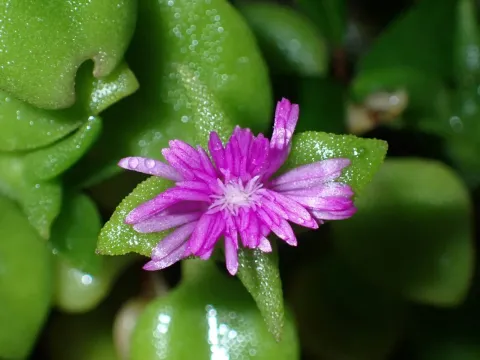
Sceletium
Sceletium N. E. Br.
Sceletium, notably Sceletium tortuosum, is primarily propagated through seeds or cuttings. Seeds should be sown in a well-draining, sandy substrate during early spring to leverage the increasing daylight hours.
What the section contains

Sceletium
Optimal germination requires soil temperatures between 20 and 25 degrees Celsius. Seeds are exceptionally small and should be sown on the surface or lightly dusted, as they require light to germinate.
For vegetative propagation, healthy cuttings are allowed to dry for several days until a callus forms at the wound site, which prevents rot upon planting in a propagation medium.
Maintaining consistent but light moisture is critical during the seedling phase. Overwatering at this stage is the most common cause of crop failure due to dampening-off pathogens.
Seedlings should be transplanted once they reach sufficient size, ensuring they are adapted to higher light intensities gradually to prevent sunburn of the delicate tissues.
As a member of the Aizoaceae family, Sceletium is a hardy succulent native to arid regions of South Africa. It demands high levels of sunlight and thrives in full sun exposure.
The soil profile must be extremely porous; a mix of loam, coarse river sand, and perlite is recommended to prevent water retention and ensure rapid drainage after irrigation.
The plant prefers moderate temperatures between 18 and 30 degrees Celsius during the growing season. It is not frost-hardy and requires protection or indoor housing during colder months.
Irrigation cycles should mimic the plant’s natural habitat: deep watering followed by a complete drying period of the root zone. During winter dormancy, water supply must be strictly limited.
Adequate ventilation is essential for Sceletium. Stagnant air in combination with high humidity can quickly lead to fungal infections, making airflow management a priority for greenhouse cultivation.
The economic value of Sceletium is derived from the alkaloid content found in the aerial parts of the plant. Biomass accumulation is relatively slow compared to high-yield crops.
Harvesting usually begins when the plants reach maturity, typically 12 to 18 months after initial propagation. The yield is determined by the total dry weight and chemical concentration of the harvested tissue.
Commercial yields can be improved through optimized lighting conditions, specifically using LED supplemental lighting to ensure consistent metabolic activity throughout the growing season.
Post-harvest management involves careful processing, as the concentration of active compounds can fluctuate significantly depending on the drying and fermentation methods applied.
Yield consistency relies on maintaining standard environmental conditions, as Sceletium is sensitive to environmental stress, which can impact both the volume and the quality of the harvested biomass.
The primary threats to Sceletium health are root rot and crown rot caused by Phytophthora and Pythium species, usually triggered by excessive moisture and poor drainage.
Common agricultural pests include mealybugs and spider mites. These thrive in low-humidity environments and require regular monitoring and immediate intervention with appropriate pest control methods.
Root mealybugs pose a significant challenge as they are often detected only after the plant shows signs of decline, making regular root health assessments a vital part of crop management.
Leaf spotting diseases may occur if humidity is poorly managed. The best control strategy involves thinning out overcrowded plants and ensuring improved air circulation around the canopy.
Prevention through the use of sterilized media and clean tools is highly effective. Avoiding cross-contamination between batches is essential to prevent the spread of soil-borne diseases.
Harvesting is performed by selectively pruning the succulent stems. Using sharp, sanitized blades is necessary to minimize trauma to the plant and prevent the entry of pathogens into the tissue.
The best time for harvesting is early morning to capture the maximum hydration and metabolic profile of the plant before peak evaporation rates occur during the heat of the day.
Once harvested, the plant material is cleaned of debris and typically processed through fermentation, a key step in transforming the plant's alkaloid profile into its desired chemical form.
Fermentation occurs in controlled environments, requiring precise monitoring of time and temperature to ensure the desired biochemical changes are completed without inducing spoilage.
The final product is dried at low temperatures, typically under 40 degrees Celsius, to prevent the volatile and heat-sensitive active ingredients from breaking down, ensuring a high-quality finished product.