
Rhipsalis trigona
Rhipsalis trigona
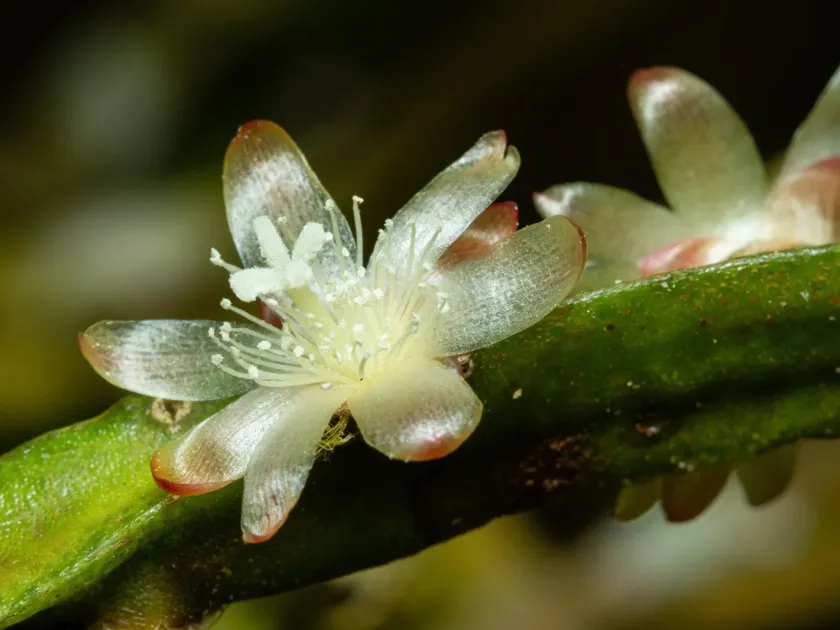
Description
Growing requirements
Rhipsalis trigona is an epiphytic succulent species belonging to the Cactaceae family. Originating from the tropical regions of South America, this plant has adapted to life high above the forest floor, typically growing on trees where it collects moisture and nutrients from the surrounding air and decomposing debris.
Botanically, the plant is distinguished by its distinct triangular stems, which serve as water-storage organs. These succulent stems allow the species to endure periods of drought in its native environment, making it a robust choice for indoor cultivation provided its specific environmental needs are met.
Cultivation requirements include bright, indirect light to mimic the filtered canopy light of its natural habitat. It thrives in a stable climate with temperatures ideally between 20 and 25 degrees Celsius. Protection from direct, harsh sunlight is crucial to prevent the stems from turning yellow or sustaining heat damage.
The substrate must be highly porous and well-draining, similar to that used for other epiphytic cacti. A mixture consisting of peat moss, coarse sand, and perlite or orchid bark is ideal. This ensures that the roots have constant access to oxygen and prevents the soil from staying soggy for too long.
Agricultural management requires careful water management. It is best to water the plant thoroughly when the top layer of the substrate becomes dry to the touch, and then allow it to drain completely. During the growth season, a balanced, dilute liquid fertilizer can be applied monthly to support healthy stem development.
Main diseases and pests
The main pests associated with Rhipsalis trigona are mealybugs and spider mites, which can thrive in dry indoor environments. Root rot and fungal infections remain the most significant threats, almost exclusively resulting from overwatering or poorly drained growing media.