
Rhipsalis dissimilis
Rhipsalis dissimilis
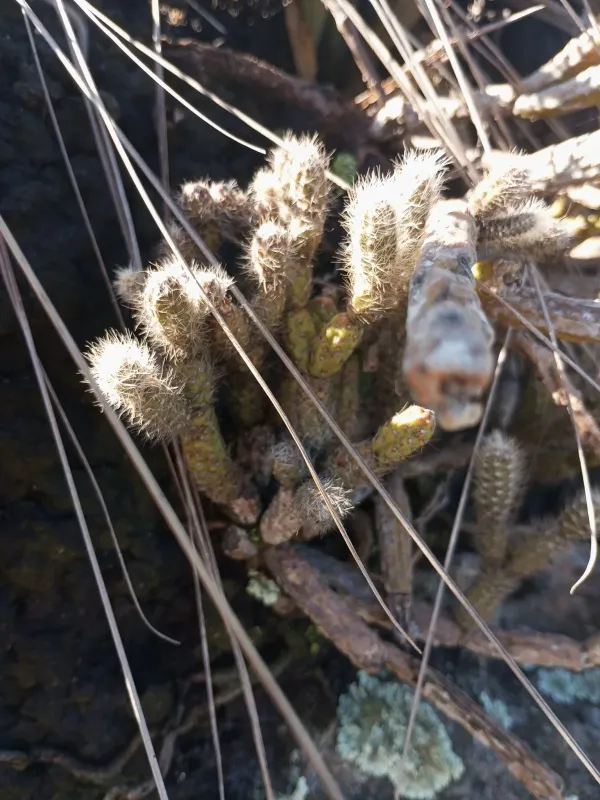
Description
Growing requirements
Rhipsalis dissimilis is a fascinating species of epiphytic cactus belonging to the Cactaceae family. Native to the tropical forests of Brazil, this plant has evolved to thrive in high-humidity environments, growing primarily on tree branches and rock crevices.
The plant features distinct, slender, and multi-branched stems composed of segmented nodes, which give it a delicate, pendulous appearance. Its botanical structure allows it to efficiently absorb moisture from the air and decaying organic matter surrounding its root system.
To cultivate this species successfully, it requires bright, filtered light. Exposure to intense midday sun is detrimental and can scorch the stems, so keeping the plant in a shaded area or behind a sheer curtain is essential for maintaining plant health.
The substrate must be well-draining, loose, and slightly acidic. A mixture containing peat moss, bark, and perlite provides the necessary structure to prevent the roots from suffocating in heavy, waterlogged soil conditions.
Agrotechnical practices involve regular misting and watering only when the top few centimeters of the substrate are dry. During the growth phase, applying a balanced, diluted fertilizer every four weeks will promote healthy vegetative expansion.
Main diseases and pests
The primary threats to Rhipsalis dissimilis are fungal pathogens caused by excessive soil moisture, which often result in rapid root and stem rot if drainage is insufficient.
Mealybugs represent the most common pest challenge, as they often hide in the tight joints between stem segments, making them difficult to detect and eradicate manually.
Spider mites can also become problematic in low-humidity environments, causing yellowing and weakening of the stems through constant sap extraction.
Proactive management includes ensuring adequate air circulation around the plants to prevent the accumulation of stagnant moisture that favors fungal growth.
Integrated pest management strategies, such as using horticultural soaps or systemic insecticides, are recommended to control infestations without damaging the sensitive, thin skin of the cactus stems.