
Rhipsalis crispata
Rhipsalis crispata
Description
Growing requirements
Rhipsalis crispata is a fascinating epiphytic species within the Cactaceae family, native to the tropical rainforests of Brazil. Unlike desert cacti, this plant grows on tree branches, thriving in high-humidity environments protected by the dense forest canopy.
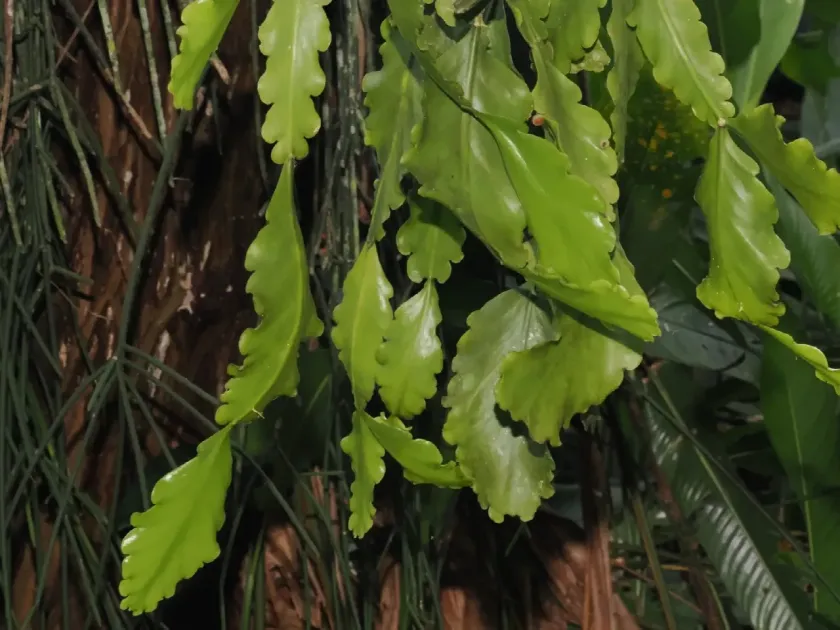
The plant is distinguished by its unique, flattened, and distinctively wavy leaf-like stems that form cascading clusters. These segments are segmented and fleshy, reflecting the plant's adaptation to retain moisture in its native arboreal habitat, far from the forest floor.
Successful cultivation requires mimicry of its natural habitat: bright, indirect sunlight and consistent ambient temperatures. Direct sun exposure is detrimental and will cause unsightly scorching of the stem tissue, significantly reducing the aesthetic and physiological vigor of the plant.
The soil medium must be highly porous and well-draining, similar to an orchid mix. A combination of peat moss, perlite, and coarse bark allows for adequate aeration of the roots, which is critical to prevent the hypoxic conditions that often lead to root rot in epiphytic succulents.
Irrigation should be managed carefully, ensuring the medium remains slightly moist but never waterlogged. As an epiphyte, Rhipsalis crispata benefits significantly from regular misting or increased ambient humidity, particularly during the active growing season when temperatures are higher.
Main diseases and pests
The most common biological threats to Rhipsalis crispata include mealybugs and spider mites, which exploit dry indoor air conditions. These pests typically cluster in the crevices between stem segments, making early detection and manual intervention vital for plant health.
Fungal pathogens such as Pythium and Fusarium are primary concerns, usually triggered by excessive moisture and poor air circulation. These diseases manifest as dark, mushy spots on the stems, often spreading rapidly if the plant is kept in an overcrowded or stagnant environment.
- Routine inspection for white cottony webs or yellow stippling on the leaves.
- Immediate isolation of affected specimens to prevent the spread of pests.
- Pruning of infected segments followed by proper tool sterilization with alcohol.
- Ensuring optimal air movement to reduce local humidity pockets around the foliage.
- Applying neem oil or specialized insecticidal soaps as preventative biological control.
Environmental stress is a major precursor to disease susceptibility. When Rhipsalis crispata experiences erratic watering or extreme temperature swings, its innate resistance to fungal attacks decreases, making it more vulnerable to opportunistic infections that would otherwise be harmless.
To ensure long-term health, growers should practice a rigorous sanitation schedule, including the removal of dead or senescing segments. A healthy, robust plant maintained under proper light and ventilation conditions will naturally be more resilient to the typical pests and diseases of this genus.