
Rhipsalis floccosa
Rhipsalis floccosa
Description
Growing requirements
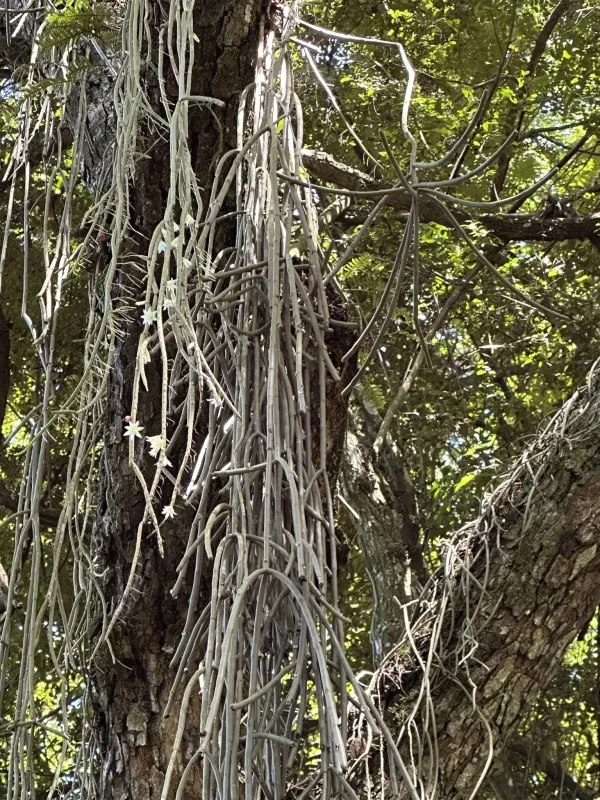
Rhipsalis floccosa is a prominent species within the Cactaceae family, classified as an epiphytic cactus. Native to the tropical regions of Brazil, it typically grows on trees in high-humidity forest environments. Its growth habit is pendulous, which is a signature characteristic of this genus.
The plant requires diffused light and thrives in environments that mimic its natural habitat under the forest canopy. Direct sunlight should be avoided as it can scorch the stems. Optimal temperature ranges from 20°C to 25°C during the active growing season, with a slight drop in temperature during the winter dormant phase.
Soil requirements for Rhipsalis floccosa focus on drainage and aeration. A substrate consisting of peat, leaf mold, and perlite or pine bark is ideal to allow roots to breathe. The plant prefers consistent moisture levels but must never sit in standing water, as the roots are highly susceptible to rot.
Agronomic management involves regular misting to maintain high relative humidity around the plant. Fertilization is best performed using a dilute balanced fertilizer specifically formulated for cacti and succulents during the spring and summer months. Repotting is recommended only when the plant outgrows its current container.
In terms of хозяйственного использования (agricultural use), Rhipsalis floccosa is primarily utilized as an ornamental plant in commercial horticulture. It is highly valued for vertical garden projects, hanging baskets, and interior landscaping due to its unique appearance and resilience in diverse indoor settings.
Main diseases and pests
The most common agricultural threats to Rhipsalis floccosa include fungal pathogens caused by improper watering practices. Overwatering in poorly draining soil leads to root and stem rot, which can quickly compromise the plant's structure and lead to total mortality.
Pest management is focused on controlling mealybugs and spider mites. Mealybugs often hide in the joints of the segments, requiring mechanical removal or systemic insecticides. Spider mites thrive in dry conditions and can cause stippling and necrosis on the epidermis of the stems.
- Root rot
- Stem fungal infections
- Mealybugs
- Spider mites