
Rhipsalis cereuscula
Rhipsalis cereuscula
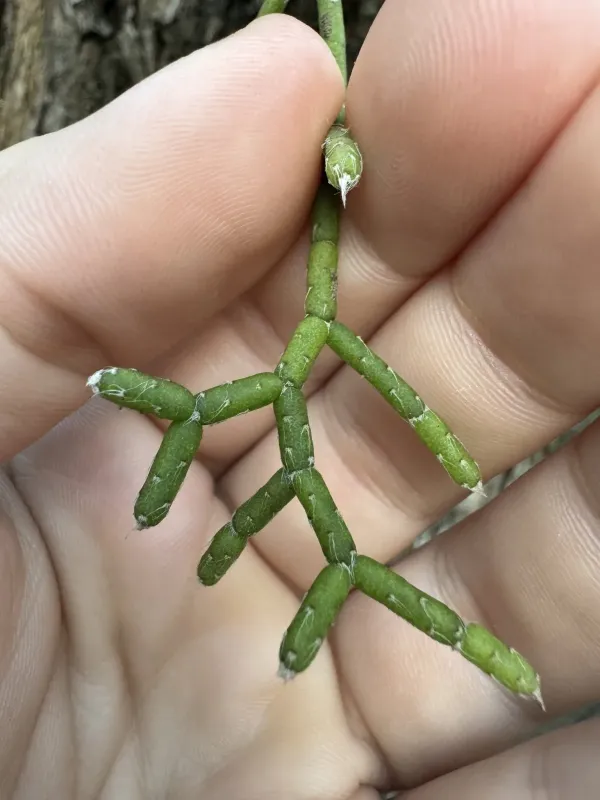
Description
Growing requirements
Rhipsalis cereuscula, widely known as the "coral cactus," is a unique epiphytic plant from the Cactaceae family native to Brazil and Argentina. Unlike typical desert cacti, this species thrives in humid forest conditions, growing on tree branches in its natural habitat.
The cultivation of this plant requires bright, filtered light. Exposure to direct intense sunlight is detrimental as it leads to tissue scorching and permanent damage to the segments. A position near an east-facing window is usually ideal for healthy development.
Regarding soil, the culture demands a porous, airy medium. A mixture based on peat moss, coarse sand, and bark is perfect for ensuring excellent drainage. Compact, heavy soils often lead to root suffocation, which is a common error in indoor cultivation.
Temperature management should focus on maintaining a warm environment, typically between 18°C and 24°C. During the winter, the plant benefits from a slight drop in temperature, which encourages potential flowering when light levels increase in the spring.
Watering frequency should be moderate, allowing the top layer of the substrate to dry out between applications. The plant appreciates high humidity levels, so daily misting is highly recommended to keep the segments vibrant and succulent.
Main diseases and pests
Root rot is the most significant threat to the plant, usually triggered by overwatering or poorly draining pots. When the substrate remains soggy for extended periods, the delicate root system begins to decay rapidly, potentially killing the entire specimen.
Mealybugs are common pests that find the dense clusters of the Rhipsalis cereuscula segments an ideal place to hide and breed. They appear as small, white, cottony masses and can be effectively controlled using insecticidal soap or specialized systemic agents.
Scale insects can also infest the stems, appearing as hard, brown bumps. They feed on the plant's sap, eventually leading to stunted growth and a loss of aesthetic appeal. Early detection through regular visual inspection is key to maintaining plant health.
Spider mites are a potential concern if the air in the room becomes consistently hot and dry. These pests thrive in dry environments and can cause visible yellowing or webbing on the segments of the plant if left unchecked.
- Use high-quality, sterilized potting soil.
- Isolate infected plants to prevent the spread of pests.
- Ensure good air circulation to deter fungal infections.