
Rhipsalis burchellii
Rhipsalis burchellii
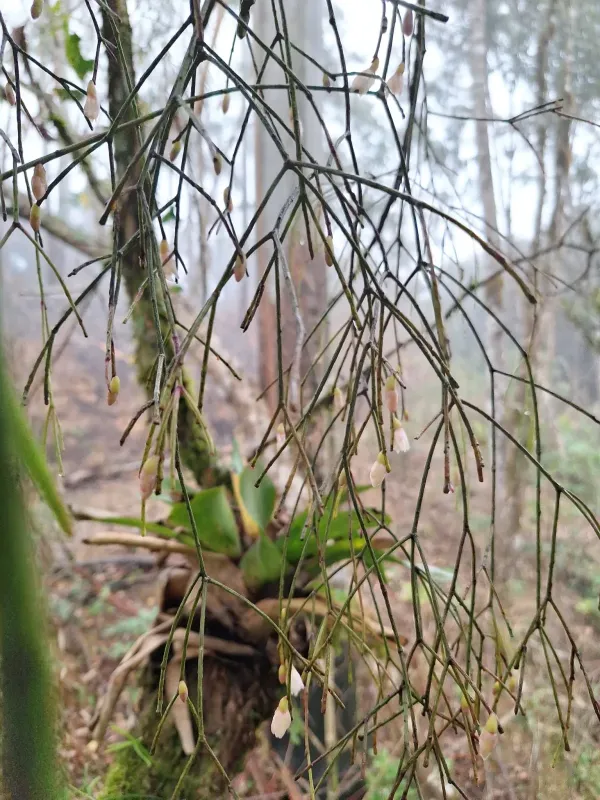
Description
Growing requirements
Rhipsalis burchellii is an epiphytic species belonging to the Cactaceae family. Native to the humid tropical forests of Brazil, this plant naturally thrives as an epiphyte, anchoring itself onto tree branches rather than growing in the forest floor soil.
The plant features distinct cylindrical, branching stems that grow in a cascading fashion, making it highly valued for ornamental use in hanging baskets. Unlike many other cacti, Rhipsalis burchellii is adapted to lower light conditions and higher atmospheric humidity.
Cultivation requirements involve providing bright, indirect light to prevent scorching of the stems. If the plant is exposed to direct afternoon sun, its growth may become stunted, and the segments may turn pale or develop necrotic spots.
Temperature management is critical for the health of this species. It prefers a consistent environment between 18°C and 24°C, and it is sensitive to cold drafts or rapid temperature drops, which can lead to shedding of the plant segments.
Soil requirements focus on high organic matter content mixed with porous materials such as perlite, pumice, or pine bark to ensure excellent drainage. Proper aeration of the root system is essential, as the roots are adapted to breathing in the moist, mossy layers of the tropical canopy.
Main diseases and pests
The primary pests affecting Rhipsalis burchellii are mealybugs and spider mites. These pests tend to hide in the joints between the segments, making regular inspections and maintenance with a damp cloth or specialized acaricides necessary.
Root rot and stem necrosis are the most common physiological issues caused by overwatering or poor drainage. To prevent these conditions, growers must ensure that the growing medium dries out partially before subsequent watering, especially during the dormant winter period.