
Rhipsalis agudoensis
Rhipsalis agudoensis
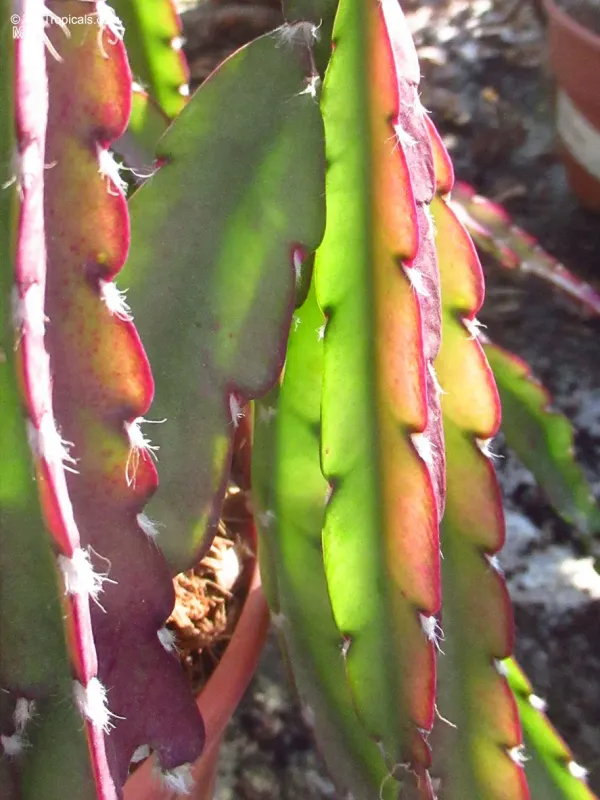
Description
Growing requirements
Rhipsalis agudoensis is a fascinating epiphytic cactus species belonging to the Cactaceae family. Originating from the tropical rainforests of Brazil, this plant has adapted to survive by growing on trees, utilizing the humid and shaded canopy environments.
Botanically, it is distinguished by its segmented, trailing stems that grow in dense, sprawling masses. Unlike desert cacti, it lacks heavy spines and thrives in soft, diffused lighting conditions, making it an excellent choice for indoor plant collections.
The cultural requirements center on maintaining high ambient humidity and consistent, but moderate, moisture levels. It does not tolerate prolonged drought or waterlogged soil, as its roots require aeration to function properly.
The ideal soil medium should be loose and organic. A mixture of orchid bark, high-quality peat moss, and perlite provides the necessary drainage while retaining enough moisture to mimic the organic debris of its natural forest habitat.
Climate control is crucial, with temperatures best kept between 18 and 25 degrees Celsius. It is sensitive to sudden drops in temperature and cold drafts, which can cause significant stress to the foliage and root systems.
Main diseases and pests
Root rot is the most critical threat to Rhipsalis agudoensis, typically caused by overwatering or poor drainage within the pot. If the roots remain in saturated soil for extended periods, they will quickly lose their integrity and decay.
Mealybugs are the primary pest concern, often lodging themselves within the tight junctions of the stem segments. They feed on plant sap and can weaken the specimen rapidly if not addressed with prompt treatment.
Spider mites can also become a problem, especially in environments where humidity levels fall too low. These pests create tiny webs and cause the plant to lose its vibrant green coloration, eventually leading to shriveling.
Scale insects present a challenge by attaching themselves firmly to the stems, creating hardened protective covers that shield them from contact pesticides, requiring mechanical removal or systemic agents.
Maintaining a clean growing environment and monitoring for the first signs of infestation are essential for successful cultivation. Regular misting can help prevent pest colonization while providing the necessary atmospheric humidity.