
Rhipsalis russellii
Rhipsalis russellii
Description
Growing requirements
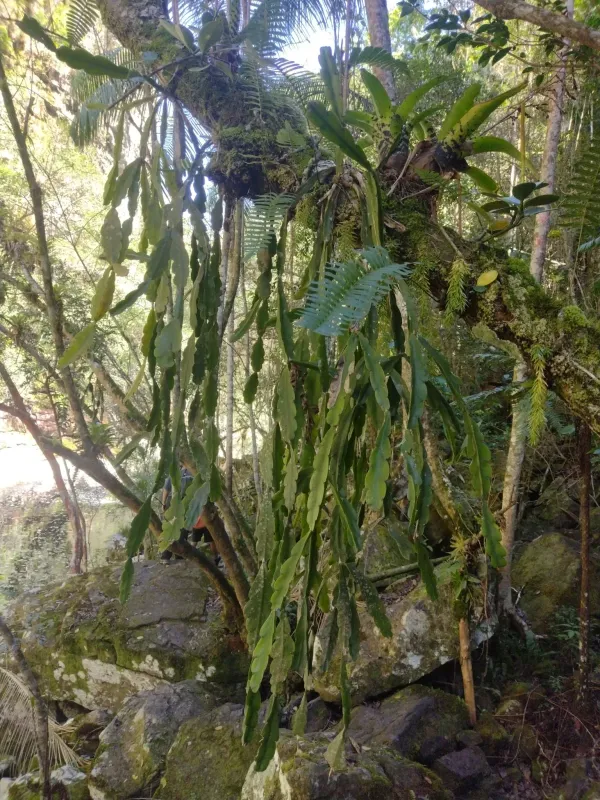
Rhipsalis russellii is a specialized epiphytic succulent belonging to the Cactaceae family. Native to the tropical forests of Brazil, this species naturally inhabits high-canopy environments, where it grows attached to trees, drawing moisture and nutrients from its humid surroundings rather than soil.
Botanically, the plant is characterized by thin, branched, cylindrical stems that droop gracefully as they grow. Its vegetative structure is optimized for moisture retention, allowing the plant to thrive in an environment where water availability can be erratic. The species is highly valued for its aesthetic appeal in interior gardening.
The plant requires bright, indirect lighting conditions. Direct sun exposure must be strictly avoided, as it can cause chlorophyll degradation and severe burning of the stem tissues. A consistent temperature between 18°C and 24°C is optimal, as the plant is sensitive to cold drafts and thermal shocks.
The growing medium must be highly porous and well-draining, mimicking the bark-based habitat of the species. A mix consisting of peat moss, perlite, and pine bark is recommended. Proper ventilation at the root level is mandatory to prevent anaerobic conditions that commonly lead to root necrosis.
Irrigation should be regular, keeping the substrate consistently moist but never waterlogged. High humidity is a critical factor for the health of Rhipsalis russellii; regular misting or the use of mechanical humidifiers is essential to simulate the natural tropical environment of its origin.
Main diseases and pests
The most frequent threats to this crop include mealybugs, which lodge in the stem joints, and spider mites, which thrive in low-humidity environments. Furthermore, root rot caused by overwatering and lack of drainage is the most lethal risk, often manifesting as sudden wilting of the stems.