
Rhipsalis pulchra
Rhipsalis pulchra
Description
Growing requirements
Rhipsalis pulchra is a distinct species of epiphytic cactus belonging to the Cactaceae family. Originating from the tropical rainforests of Brazil, it has evolved to thrive on tree bark, utilizing its aerial roots to absorb moisture and nutrients from the surrounding environment. It is a highly valued plant in ornamental horticulture due to its unique growth habit.
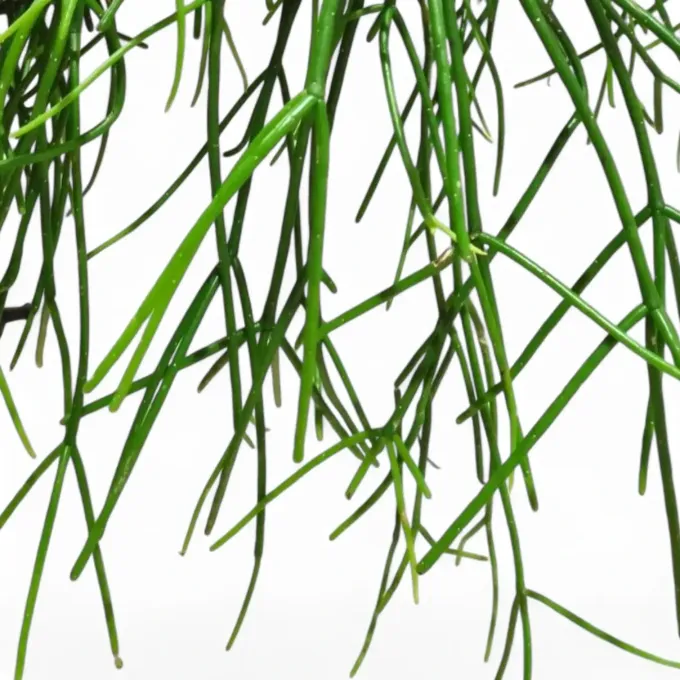
Botanically, Rhipsalis pulchra is characterized by its cylindrical, branching stems that form dense, cascading clusters. Unlike desert cacti, it lacks sharp, prominent spines, possessing instead delicate bristles or smooth stems that reflect its adaptation to humid and shaded environments under the forest canopy.
To cultivate this plant successfully, one must maintain high humidity levels and avoid direct, harsh sunlight, which can easily scorch the succulent tissues. A semi-shaded location with bright, indirect light is ideal for healthy stem development and ensuring the plant maintains its deep green coloration.
The substrate requirement for Rhipsalis pulchra is quite specific: it requires a very airy, well-drained, and organic-rich mix. A standard potting soil will lead to root suffocation; therefore, a mixture of pine bark, perlite, peat, and a small amount of charcoal is recommended to mirror its natural epiphytic habitat.
Watering frequency should be determined by the rate at which the growing medium dries out. The plant prefers to be kept consistently moist but never waterlogged. During the growing season, a balanced, dilute liquid fertilizer can be applied to support the energy-intensive process of new stem production.
Main diseases and pests
The primary threats to the health of Rhipsalis pulchra are fungal pathogens and root rots caused by improper watering practices. Excess moisture trapped in the root zone creates an anaerobic environment that rapidly promotes the decay of the root system and can lead to the sudden collapse of the plant.
Insect pests, particularly mealybugs and spider mites, are significant threats in indoor growing environments. Mealybugs tend to lodge themselves in the crevices between stem segments, making them difficult to detect until a significant infestation has established itself and caused yellowing of the segments.
Spider mites thrive in conditions of low humidity and stagnant air. Regular monitoring of the stem tips and the undersides of segments is critical. If webbing or stippling appears, immediate intervention with insecticidal soaps or horticultural oils is necessary to protect the plant's structural integrity.
To prevent disease outbreaks, ensure adequate air circulation around the plants at all times. Stagnant air encourages the proliferation of fungal spores. If signs of rot appear, prune the infected segments immediately using sterile tools and adjust the irrigation regime to allow the substrate to dry out slightly more between waterings.
- Sterilize all pruning equipment with isopropyl alcohol.
- Implement an isolation period for any new plants introduced to the collection.
- Use systemic insecticides only as a last resort for severe infestations.