
Rhipsalis platycarpa
Rhipsalis platycarpa
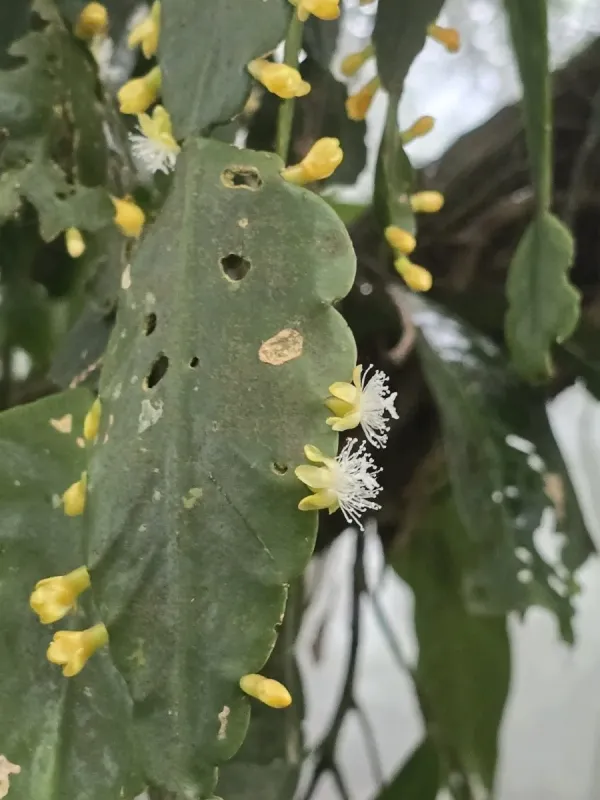
Description
Growing requirements
Rhipsalis platycarpa is a species of epiphytic forest cactus belonging to the Cactaceae family. Originating from the tropical regions of Brazil, this plant naturally thrives in humid environments, typically growing on trees or rock surfaces where it utilizes organic debris for nutrients.
Regarding light requirements, this plant prefers bright, filtered light. Exposure to direct intense sunlight can damage the epidermis of its flattened, jointed stems. Maintaining a temperature range between 18°C and 25°C is ideal for its vegetative growth throughout the year.
The substrate must mimic the natural epiphytic environment, being highly porous and well-draining. A professional growing mix should contain pine bark, perlite, peat moss, and high-quality leaf mold. This structure ensures sufficient airflow to the root zone, preventing asphyxiation.
Irrigation management is critical; the soil should remain consistently moist during the peak growing season, but never waterlogged. During winter months, when growth slows, the plant requires significantly less water to mirror the natural dormant phase and prevent rot.
Humidity is a vital factor for the successful cultivation of Rhipsalis platycarpa. Regular misting or the use of humidifiers helps the plant maintain turgor pressure in its stems. Propagation is best achieved via stem cuttings that root easily in a light, sterile potting medium.
Main diseases and pests
Mealybugs are the most common pest affecting Rhipsalis platycarpa, often clustering in the crevices between stem segments. Their feeding activities weaken the plant and can facilitate the transmission of secondary viral or fungal infections.
Spider mites can become problematic in low-humidity indoor environments. These pests cause stippling and yellowing of the stems, often necessitating the use of specialized miticides or increased humidity to restore plant health.
Root rot remains the most significant threat to the survival of the plant. It is primarily caused by overwatering and the use of dense, poorly draining soil that retains moisture for too long, allowing pathogens to destroy the root system.
Stem spot diseases caused by various fungi can lead to necrosis of the segments. Management involves physical removal of the diseased tissue, followed by applications of systemic fungicides and improved air circulation to lower the localized humidity.
Nutritional deficiencies, manifesting as chlorosis or stunted growth, are often treated with diluted, balanced cactus fertilizers during the growing season. It is essential to flush the soil periodically to prevent the buildup of mineral salts, which can damage sensitive roots.