
Rhipsalis pilocarpa
Rhipsalis pilocarpa
Description
Growing requirements
Rhipsalis pilocarpa is a unique epiphytic plant belonging to the Cactaceae family. Native to the tropical forests of Brazil, this species grows naturally on tree trunks, utilizing its environment to capture moisture and nutrients from the air and organic debris.
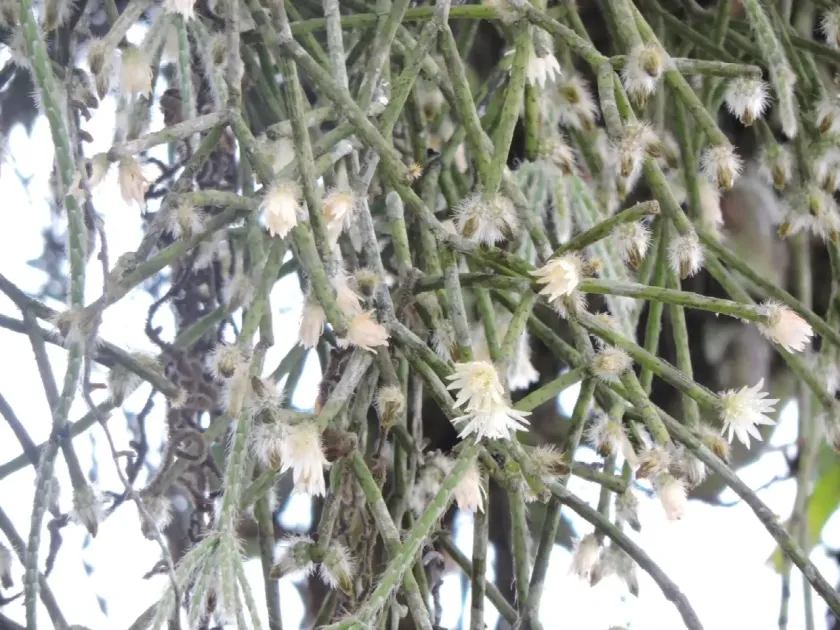
Botanically, this species is distinguished by its cylindrical, hairy stems that develop a characteristic reddish hue under optimal light conditions. The plant produces fragrant, bell-shaped white flowers followed by bristly fruit, which gives the plant its specific epithet.
The climate requirements involve maintaining a constant ambient temperature between 18 and 26 degrees Celsius. Sudden temperature drops or cold drafts must be avoided, as they can cause significant stress to the plant and inhibit metabolic processes.
The substrate should be well-draining and airy, mimicking the conditions of tree bark. A mixture consisting of peat, orchid bark, and perlite is recommended to prevent waterlogging and ensure adequate oxygen circulation around the root zone.
Regarding light, this plant prefers bright, filtered light. While it is more shade-tolerant than traditional desert cacti, it still requires sufficient light intensity to maintain its structural integrity and encourage regular flowering cycles.
Main diseases and pests
Common pests affecting Rhipsalis pilocarpa include mealybugs and spider mites. These pests thrive in dry environments and tend to congregate in the protected areas between stem segments, making them difficult to detect at early infestation stages.
Root rot is the most critical threat to the long-term survival of the plant. It is primarily caused by improper watering techniques, where excess water accumulates at the bottom of the container, leading to the rapid decay of fine, delicate root systems.
To prevent disease, it is essential to ensure that the potting medium dries out slightly between watering sessions. During winter months, irrigation frequency should be significantly reduced to match the plant's slower rate of transpiration.
Proactive management includes periodic cleaning of the stems and using a light neem oil solution to deter potential pests. Ensuring good air circulation is also a critical cultural practice to mitigate the risk of fungal infections in confined growing spaces.
If decay is observed, immediate excision of the infected segments is necessary to prevent the systemic spread of pathogens. Sterilizing all pruning tools before and after handling the plant is a fundamental requirement for maintaining a healthy collection.