
Rhipsalis pentaptera
Rhipsalis pentaptera
Description
Growing requirements
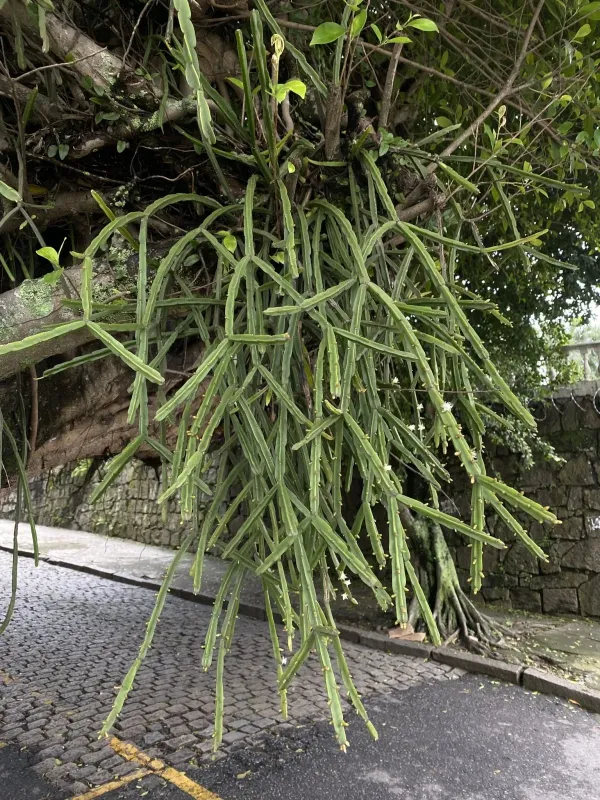
Rhipsalis pentaptera is a remarkable epiphytic plant belonging to the Cactaceae family. Originating from the tropical rainforests of South America, specifically Brazil, this species naturally thrives in high-humidity environments, anchoring itself to tree trunks or rocks.
The botanical structure of this culture is defined by its distinctive five-ribbed, cylindrical stems that branch out extensively. Unlike desert cacti, Rhipsalis pentaptera lacks spines and relies on its fleshy, succulent stems to store water for periods of lower precipitation.
Cultivation requirements focus on mimicking a tropical understory environment. The plant requires bright but filtered indirect light; exposure to harsh, direct sunlight will quickly scorch its vibrant green stems, leading to irreversible tissue damage.
The substrate must be exceptionally well-draining, similar to those used for orchids or other epiphytes. A mix of peat, pine bark, perlite, and coarse sand provides the necessary aeration for roots to breathe, preventing the suffocation typical in dense garden soils.
In terms of agricultural and commercial application, this species is cultivated as an ornamental plant. It is widely used in interior design, vertical gardens, and specialized greenhouse collections due to its trailing growth habit and unique aesthetic appeal in hanging baskets.
Main diseases and pests
The most significant pest threats include mealybugs and spider mites, which thrive in dry indoor air. Routine misting and physical removal or the use of appropriate insecticidal soaps are necessary to keep the plant healthy.
Pathogenic threats are primarily associated with moisture management. Root rot is a common occurrence if the plant is left in water-logged soil, which weakens the base of the stems and can lead to rapid collapse of the entire specimen if not addressed.