
Rhipsalis neves-armondii
Rhipsalis neves-armondii
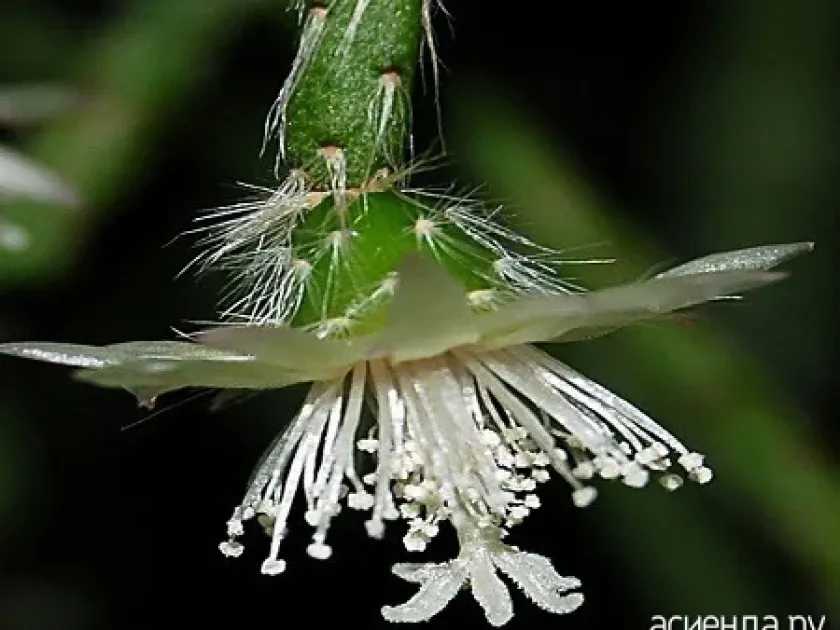
Description
Growing requirements
Rhipsalis neves-armondii is a botanical species belonging to the Cactaceae family. It is an epiphytic cactus native to the tropical rainforests of Brazil, where it typically grows on tree branches in the canopy layer.
The plant is characterized by its distinctively slender, branching, cylindrical stems. Unlike many desert cacti, this species has adapted to the high-humidity, low-light conditions of the forest interior.
Optimal cultivation requires bright, indirect light exposure. High-intensity direct sunlight is detrimental, as it causes surface scorching and loss of the plant's characteristic green pigmentation.
Regarding substrate requirements, the plant demands a well-draining, airy medium. A mixture of peat, perlite, and orchid bark is highly recommended to prevent compaction around the delicate root system.
Consistency is key for its environment: the temperature should ideally remain between 20°C and 25°C. High ambient humidity is essential for the healthy development of its aerial root structures.
Main diseases and pests
The most common pests affecting this species are mealybugs and spider mites. These organisms thrive in dry indoor environments and target the stem junctions of the plant.
Root rot, induced by overwatering and poor drainage, represents the most significant phytopathological threat. This condition often leads to rapid decay of the vascular tissues.
Integrated pest management suggests regular visual inspections, particularly during the dormant season, to detect early infestations before they spread across the hanging stems.
To prevent disease, it is crucial to use sterilized potting media and to avoid leaving the plant sitting in water-filled saucers, which limits oxygen availability to the roots.
Maintaining proper air circulation around the plant is an effective cultural practice to mitigate the risk of fungal infections and to ensure the plant remains in its peak ornamental state.