
Rhipsalis micrantha
Rhipsalis micrantha
Description
Growing requirements
Rhipsalis micrantha is an intriguing epiphytic species belonging to the Cactaceae family. Originating from the humid forests of Central and South America, it naturally grows as an epiphyte on trees or lithophyte on rocky outcrops, thriving in the filtered light of the rainforest canopy.
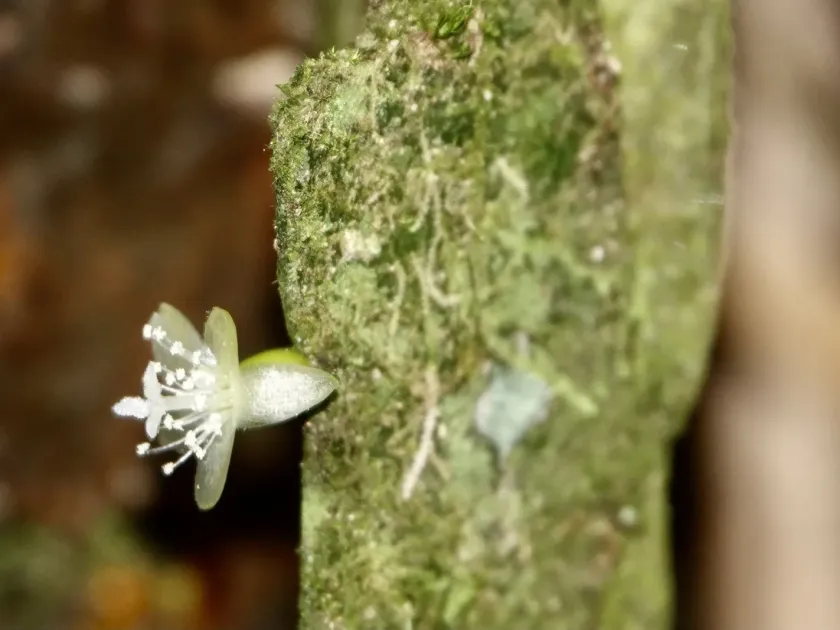
Botanically, it is recognized by its slender, branching stems that lack the sharp spines typical of desert cacti. These stems are succulent in nature, allowing the plant to store water during periods of scarce moisture, which is a key adaptation for its survival in a non-terrestrial environment.
To cultivate this species successfully, one must replicate its natural humid and shaded environment. It prefers bright, indirect light; harsh direct sunlight is highly detrimental and will cause the stems to yellow or burn. A temperature range between 18°C and 25°C is ideal for growth.
The substrate must be well-draining and airy, ideally composed of orchid bark, coco coir, and perlite. Unlike desert cacti, Rhipsalis requires a substrate that retains a small amount of moisture while ensuring that the roots are well-aerated to prevent oxygen deprivation and fungal growth.
Watering practice should follow the moisture levels of the potting medium. Keep the soil slightly moist, allowing the top inch to dry out between waterings. During winter, reduce watering frequency significantly, as the metabolic rate of the plant slows down, making it prone to water-related stress.
Main diseases and pests
Pest infestations such as mealybugs and spider mites are the most common challenges for Rhipsalis micrantha, especially in low-humidity indoor environments. These pests reside in the crevices of the stems, making them difficult to detect until the plant starts showing signs of stunted growth.
Root rot is the primary pathological threat, typically induced by overwatering or poor drainage. Fungal pathogens flourish in stagnant, waterlogged media, quickly compromising the vascular system of the cactus. Proper diagnostic includes checking for blackened or mushy stem bases, which indicate severe systemic infection.