
Rhipsalis mesembryanthemoides
Rhipsalis mesembryanthemoides
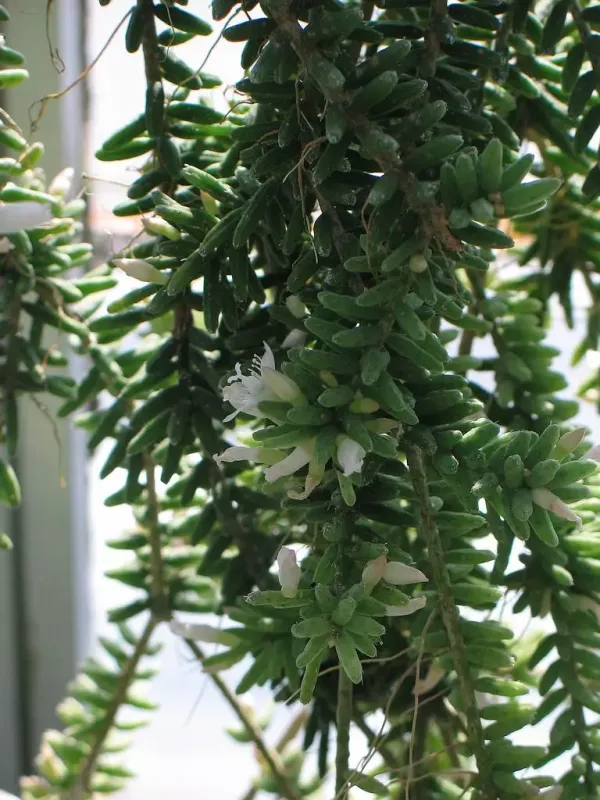
Description
Growing requirements
Rhipsalis mesembryanthemoides is an exquisite epiphytic cactus belonging to the Cactaceae family. Native to the humid rainforests of Brazil, this species has evolved as an epiphyte, growing on tree branches rather than in the soil, adapting to a life under a dense forest canopy.
The cultural requirements for this plant focus on replicating its natural habitat. It prefers bright, indirect light. Placing it in a position where it receives filtered morning sun is ideal, as direct noon light will scorch its delicate, needle-like stem segments.
High humidity levels are essential for this plant. To achieve this, it is recommended to mist the plant regularly or use a pebble tray filled with water to ensure that the surrounding atmosphere remains consistently moist, especially during summer months.
Temperature management should follow seasonal variations. During the active growing season, temperatures between 20 °C and 25 °C are optimal. In winter, keeping the plant in a cooler environment, around 15 °C, is beneficial for triggering its annual blooming cycle.
For the growth medium, a well-draining, airy mix is required. A combination of coco coir, peat moss, perlite, and coarse bark pieces allows for both water retention and necessary aeration to prevent the roots from suffocating in a dense, waterlogged soil.
Main diseases and pests
Mealybugs are the most common pests found on Rhipsalis mesembryanthemoides, often concealing themselves within the intricate joints of the stems. If spotted, they should be treated promptly with insecticidal soap or a localized application of isopropyl alcohol.
Spider mites can become an issue if the ambient air remains dry for extended periods. These pests weave fine webs and weaken the plant, so maintaining high humidity and ensuring good air circulation is the best way to prevent their proliferation.
Root rot is the primary disease associated with this crop, usually caused by overwatering or poor drainage. The symptoms include soft, mushy stems and browning of the base, which require immediate repotting into fresh, dry substrate and pruning of the affected tissue.
Fungal pathogens such as Fusarium can attack the plant when it is stressed by improper environmental conditions. Keeping the crown of the plant clean and avoiding water buildup in the containers helps minimize the risk of infection.
Regular monitoring of the plant's health, particularly checking the underside of stems and the growing medium surface, is crucial for early detection of potential threats. Maintaining vigorous health through correct fertilization and care is the best defense against pests.