
Rhipsalis juengeri
Rhipsalis juengeri
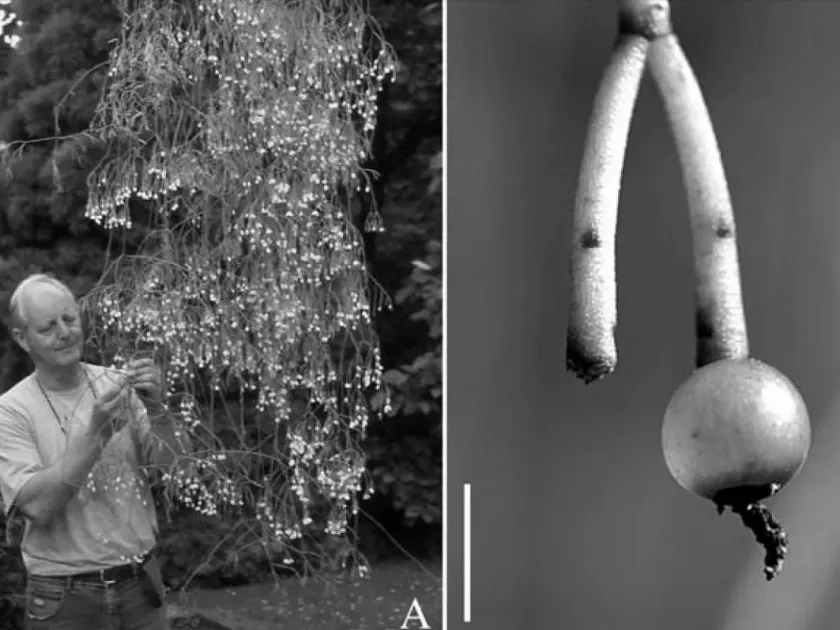
Description
Growing requirements
Rhipsalis juengeri is a fascinating species belonging to the Cactaceae family, native to the tropical rainforests of Brazil. As an epiphyte, it grows on tree branches rather than in soil, making it a unique botanical specimen for specialized cultivation.
This plant thrives in bright, filtered light conditions. In its natural habitat, it is shaded by the forest canopy, so direct sun exposure must be avoided to prevent scorched stems and stunted growth.
The ideal temperature range for this species is between 20°C and 25°C during the growing season. It is not cold-hardy and should be protected from temperatures below 15°C to avoid metabolic shock and tissue damage.
The substrate must be highly porous and well-draining, mimicking the debris found in tree bark crevices. A mix of orchid bark, perlite, and a small amount of peat or coco coir is typically recommended for optimal health.
Watering requirements include keeping the substrate slightly moist but never waterlogged. The high humidity of its native environment should be replicated through regular misting, especially during warmer months.
Main diseases and pests
Pest infestations, particularly mealybugs and spider mites, are common issues for Rhipsalis juengeri, especially in indoor environments with poor air circulation and low humidity.
Root rot, often caused by overwatering or using a heavy substrate that lacks aeration, is a severe threat. If the roots remain constantly wet, the plant will quickly succumb to fungal infections.
Monitoring the plant for signs of stress, such as shriveling or discoloring stems, allows for early detection of potential problems before they become systemic and difficult to manage.
Fungal diseases can sometimes be managed by improving environmental conditions, such as increasing air movement and reducing humidity around the roots while maintaining it in the air.
In cases of severe infestation, using mild systemic insecticides is necessary. However, it is always safer to physically remove visible pests with a cotton swab dipped in alcohol as a primary measure.