
Rhipsalis
Rhipsalis hybrids
Description
Growing requirements
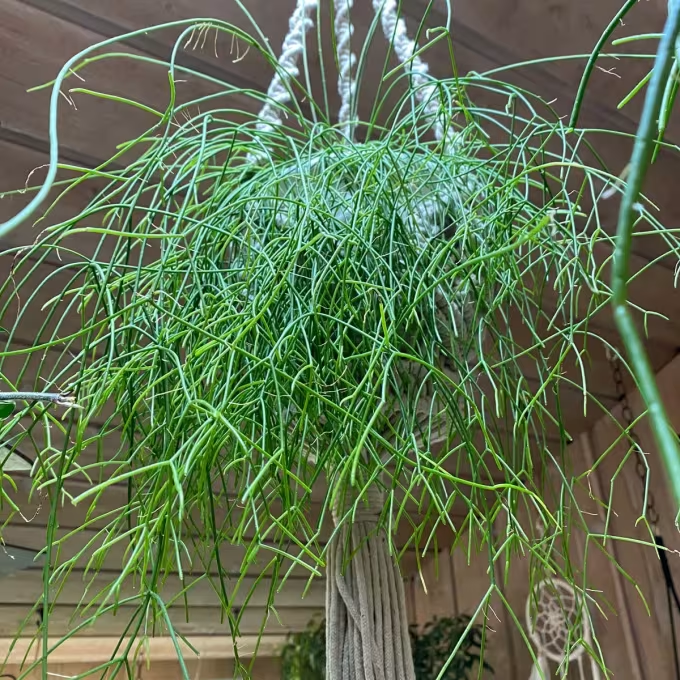
Rhipsalis is a diverse genus within the Cactaceae family, known for its unique growth as an epiphytic cactus. Native to the tropical rainforests of Central and South America, these plants typically grow on tree branches or in crevices, thriving in humid forest environments.
Botanically, Rhipsalis species are distinguished by their spineless, succulent stems that come in various forms, including cylindrical, ribbed, and flattened segments. Unlike desert cacti, they have evolved to absorb moisture and nutrients from the surrounding air and decomposing organic debris.
To cultivate these plants successfully, one must provide bright, indirect sunlight, as intense direct sun can scorch the delicate stems. The ideal temperature ranges between 20 and 24 degrees Celsius, with a slight cooling period being beneficial during the winter months.
Soil requirements for Rhipsalis focus on high aeration and excellent drainage. A specialized mix consisting of peat moss, perlite, and pine bark is recommended to mimic their natural epiphytic substrate and ensure the roots receive sufficient oxygen.
Effective agronomic management requires regular watering that keeps the soil consistently moist but never waterlogged. Since these cacti lack a significant water storage organ compared to desert varieties, they are sensitive to both prolonged drought and excessive moisture.
Main diseases and pests
The most common pests affecting Rhipsalis include mealybugs, spider mites, and scale insects. These pests often congregate in the joints of the stem segments, draining the plant of vitality and causing visible spotting or stunted growth.
Diseases in Rhipsalis are predominantly related to moisture imbalances, with root rot being the primary concern. Pathogens like Phytophthora thrive when the plant is kept in saturated, anaerobic conditions, leading to the rapid decay of the base.
Management of pest populations involves early detection and the use of insecticidal soaps or systemic treatments tailored for indoor succulents. Ensuring proper airflow and humidity levels is the most effective preventative measure against mite infestations.
Addressing fungal issues requires the immediate removal of necrotic tissue and repotting the plant into a fresh, well-draining medium. Avoiding water accumulation in the crown of the plant during watering is essential for disease prevention.
By strictly adhering to a proper irrigation schedule and maintaining optimal environmental conditions, the risk of disease and pest pressure is significantly reduced, ensuring the health and aesthetic longevity of the Rhipsalis specimens.