
Rhipsalis grandiflora
Rhipsalis grandiflora
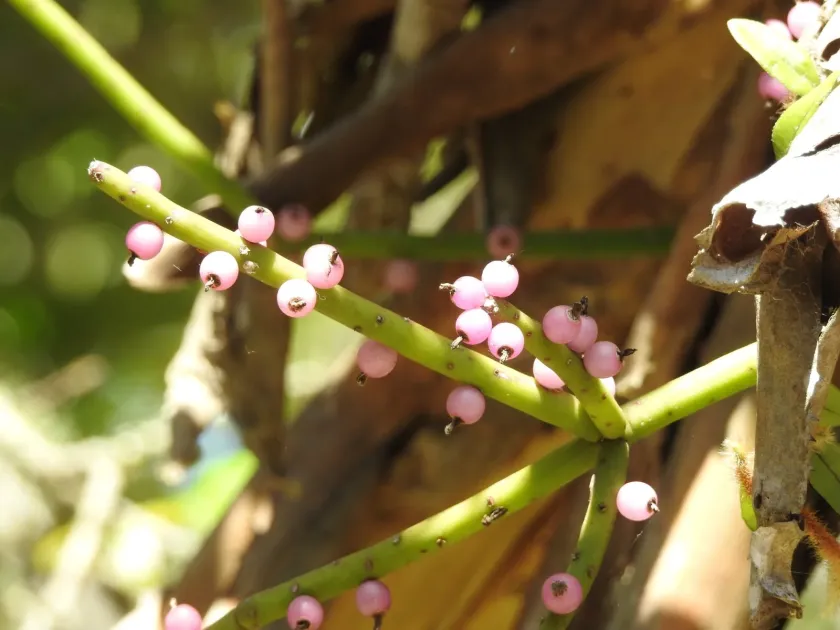
Description
Growing requirements
Rhipsalis grandiflora belongs to the family Cactaceae, specifically within the epiphytic group of cacti. Originating from the tropical rainforests of Brazil, this species is adapted to high humidity environments where it grows on tree branches.
The plant requires bright, filtered light to flourish. Exposure to direct midday sun is detrimental to its foliage, often resulting in bleaching and tissue damage. Temperature management is crucial, keeping the plant between 20°C and 25°C throughout the growing season.
The substrate must be highly porous and well-draining, similar to an orchid potting mix. A mixture of peat, pine bark, and perlite provides the necessary airflow for the roots, which is essential to prevent asphyxiation of the root system.
Agronomic management involves maintaining consistent moisture levels. Unlike desert cacti, Rhipsalis grandiflora needs regular watering, especially during the active growth phase, ensuring the substrate never dries out completely but is never waterlogged.
Commercially, this species is highly valued in the nursery industry for its aesthetic appeal. It is widely used in indoor landscaping, interior design, and as a specialized ornamental plant in hanging baskets, which highlight its pendulous growth habit.
Main diseases and pests
Root rot is the most significant threat to this crop, usually caused by poor drainage or excessive watering. Once the roots are compromised, the decay can quickly spread through the succulent stems.
Mealybugs are common pests that colonize the junctions of the stems. They are difficult to eradicate once an infestation is established, requiring systemic pesticides or manual removal with alcohol.
Spider mites represent a secondary threat in low-humidity environments. These pests cause chlorosis and thinning of the stems, leading to an overall decline in the plant's health and vigor.
Fungal infections can also occur due to poor air circulation around the canopy. Maintaining moderate ventilation in the growing area is essential for preventing the development of mold and mildews.
Adherence to a strict sanitation protocol, including the use of sterilized soil and regular inspections, is the best strategy for maintaining a disease-free production environment.