
Leucospermum cordifolium
Leucospermum cordifolium (Salisb. ex Knight) Fourc.
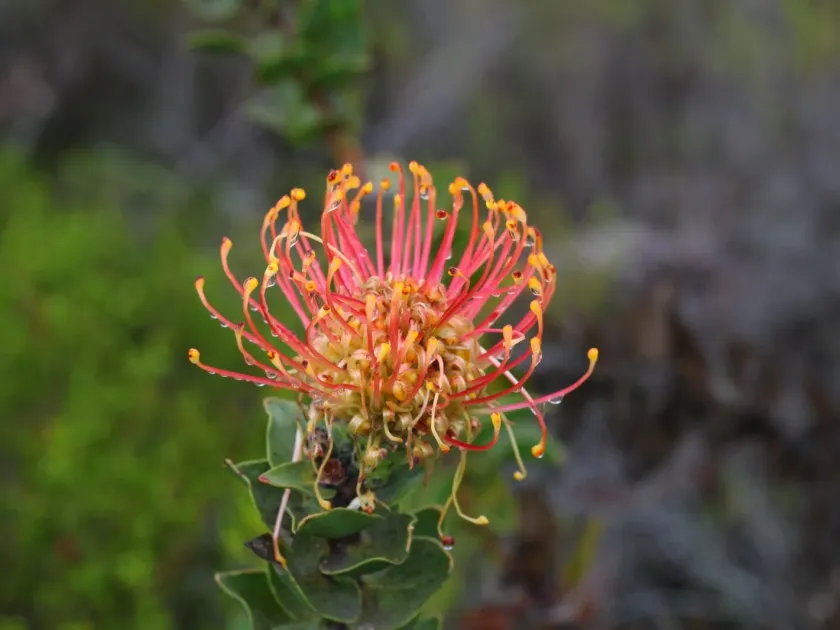
Description
Growing requirements
Leucospermum cordifolium, commonly known as the pincushion protea, is a perennial shrub belonging to the Proteaceae family. It is native to the acidic, sandy soils of the Western Cape in South Africa.
The plant thrives in Mediterranean-type climates characterized by mild, wet winters and warm, dry summers. It is intolerant to frost and requires sheltered environments in cooler regions.
Soil requirements are strict: the medium must be well-drained, acidic (pH 5.0–6.0), and low in phosphate. Any heavy or waterlogged soil will inevitably lead to root system failure.
Full sun is essential for vigorous growth and flower production. Shade causes weak, leggy stems and inhibits the formation of the characteristic pincushion-like inflorescences.
Water management is critical. Drip irrigation is preferred to maintain consistent moisture without wetting the foliage, as excessive humidity can trigger fungal infections.
Yield
Leucospermum cordifolium is cultivated primarily for the cut-flower market. Its unique, long-lasting blooms are highly prized by florists for professional arrangements and bouquets.
Commercial yields depend heavily on pruning strategies. Pruning after the flowering season encourages the development of new, strong flowering stems for the following year.
A well-maintained mature bush can produce between 30 and 60 marketable stems per season, depending on the cultivar and the environmental conditions provided.
Harvesting should occur when the individual florets begin to open but before the stamens become overly brittle. Proper post-harvest cooling is vital to maintain the product's shelf life.
The global demand for exotic proteas ensures a stable market for growers who can manage the precise technical requirements of this high-value floricultural crop.
Main diseases and pests
The most devastating threat to pincushion protea crops is Phytophthora root rot. This pathogen thrives in poorly drained soils and spreads rapidly throughout the plantation.
Pests such as mealybugs and spider mites frequently infest the plants, particularly in greenhouse settings where air circulation might be insufficient.
Botrytis blight can damage the inflorescences if high humidity levels persist during the harvesting season, leading to significant post-harvest losses.
Management practices focus on preventive measures, including the use of certified disease-free planting material and rigorous substrate sanitation.
- Regular monitoring for signs of wilt.
- Avoidance of excess nitrogenous fertilizers.
- Strict hygiene protocols for tools and equipment.