
Leucospermum hybrid
Leucospermum erubescens x Leucospermum cuniforme
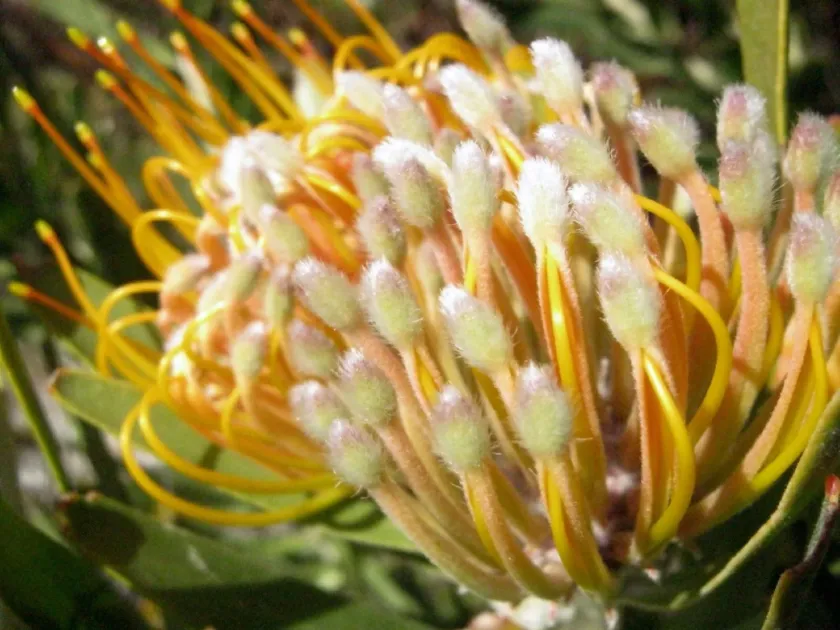
Description
Sowing dates
Leucospermum hybrid (Leucospermum erubescens x Leucospermum cuneiforme) belongs to the Proteaceae family. Propagation is primarily conducted via vegetative cuttings, as seed reproduction does not reliably maintain the hybrid's specific genetic characteristics.
The ideal time for taking cuttings is late summer to early autumn when stems are semi-hardwood. Cuttings should be planted in a well-draining, acidic substrate with bottom heat provided to ensure a high success rate in rooting.
Seed germination requires specialized treatments like scarification or smoke-induced germination to mimic natural South African fire-ecology cycles. This method is generally reserved for research or breeding programs due to its complexity.
The rooting medium must be composed of inorganic materials like sand and perlite to prevent root rot. Maintaining a sterile environment during the rooting phase is crucial to avoid fungal pathogens.
Once rooted, young plants require a hardening-off period in a greenhouse before being transferred to their final growing location. A consistent temperature above 15 degrees Celsius must be maintained.
Growing requirements
Originating from South Africa, this culture requires high solar irradiance and excellent air movement. It thrives in regions with Mediterranean-type climates, ensuring moderate temperatures throughout the year.
The soil must be acidic (pH 5.0–6.0) and phosphorus-poor. Standard garden fertilizers should be avoided, as phosphorus toxicity can rapidly kill the plant's sensitive root system. Specialized fertilizers for proteas are recommended.
Watering must be frequent enough to keep the soil moist but never waterlogged. Excellent drainage is non-negotiable; heavy, clay-based soils are unsuitable for commercial production of this species.
Protection from extreme cold and drying winds is necessary to preserve the delicate flower structures. If grown in pots, plants should be moved to protected environments during harsh weather conditions.
Regular pruning immediately after flowering is essential for canopy management and to encourage the development of new flowering stems for the subsequent season. Removing spent blooms helps focus plant energy.
Yield
The yield of Leucospermum hybrid depends on environmental control and plant health. A mature, well-maintained shrub can produce approximately 30 to 50 high-quality floral stems annually.
These stems are highly valued in the global cut-flower industry for their unique texture and long vase life. They are a staple in high-end arrangements, offering a distinctive architectural element to designs.
Commercial profitability is optimized through precision irrigation and careful nutrient management. Typical planting densities range from 2500 to 3000 plants per hectare, depending on local conditions.
Harvesting is performed when the flower head is fully formed but before the individual styles have fully extended. This timing ensures the product arrives at the market in prime condition.
Market demand remains steady for this exotic variety, with international floristry markets providing the strongest price points for premium-grade stems with unblemished foliage and blooms.
Main diseases and pests
Phytophthora root rot is the most significant threat to Leucospermum species. It is encouraged by poor drainage and excessive moisture, making preventative soil management the most important control measure.
Pests such as mealybugs and spider mites thrive in warm, confined greenhouse environments. Regular scouting and the use of integrated pest management (IPM) practices are required to maintain a healthy crop.
Chlorosis, often caused by nutrient imbalances or incorrect soil pH, can severely weaken the plant. Regular leaf analysis and water quality monitoring help in mitigating these physiological disorders.
Leaf rust and other fungal foliage diseases can occur in high-humidity areas with stagnant air. Increasing air circulation and avoiding overhead watering are effective cultural controls.
- Phytophthora root rot
- Mealybugs
- Spider mites
- Chlorosis
- Leaf spot diseases
Harvesting
Stems should be harvested using sterilized pruning shears, cutting at an angle to prevent water pooling on the cut site. Avoid cutting into old, lignified wood to ensure the plant continues to produce new stems.
Immediately after cutting, stems must be placed in clean, acidified water with floral preservatives to prevent vascular airlocks and maintain hydration.
Transportation requires cool chain management, keeping temperatures between 5 and 10 degrees Celsius. Packaging must ensure that the delicate 'pincushion' flower heads are protected from physical damage.
Grading is based on stem length, floral head maturity, and foliage quality. Only stems that meet strict standards for lack of damage or insect marking are marketed for premium floral use.
Scheduling harvests correctly ensures that plants have sufficient time to recover before the next cycle, maximizing the total lifetime productivity of the individual bush.