
Leucospermum
Leucospermum cordifolium x Leucospermum glabrum
Description
Sowing dates
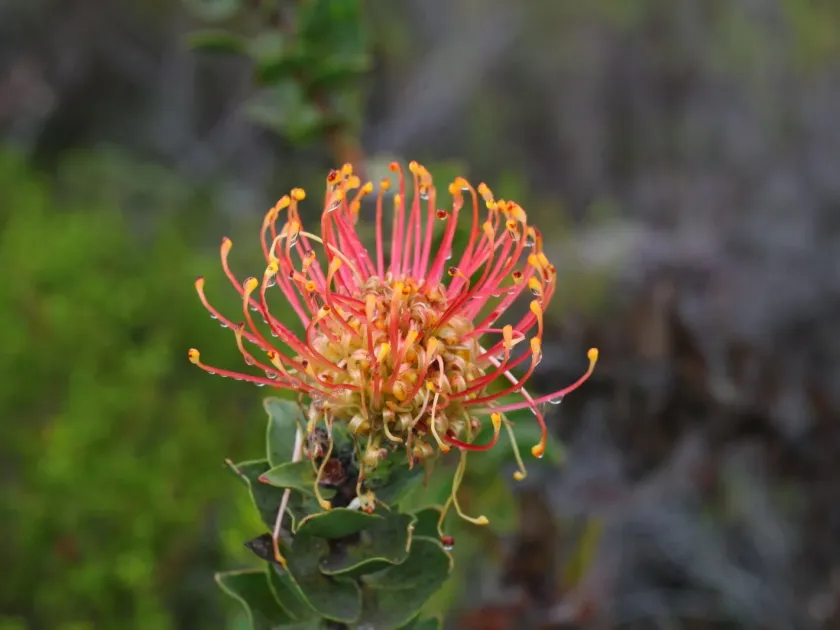
Leucospermum (Leucospermum cordifolium x Leucospermum glabrum) is a hybrid plant belonging to the Proteaceae family. This evergreen shrub is highly valued in industrial floriculture for its unique, pin-cushion-like inflorescences that offer distinct aesthetic appeal.
In commercial agriculture, propagation is typically achieved through stem cuttings. Seed propagation is rarely used because it does not reliably preserve the characteristics of the hybrid and takes significantly longer, making clonal saplings the industry standard for plantation establishment.
The ideal time to plant these shrubs is in the spring, once the risk of frost has passed. The root system of Leucospermum is extremely delicate and sensitive to disturbance, so transplanting should always be done carefully with minimal disruption to the root ball.
Planting density is crucial; a minimum spacing of 1.5 to 2 meters between plants is required to ensure adequate airflow and light penetration. Proper spacing is essential to prevent overcrowding, which can lead to moisture retention and subsequent disease development.
Mulching the base of the plant is recommended to maintain stable soil temperatures, though the material must never come into direct contact with the root collar to avoid rot. Inorganic mulches like gravel are often preferred over organic ones to prevent humidity issues.
Growing requirements
Leucospermum requires a specialized soil environment that is acidic (pH 5.0–6.0) and has excellent drainage. These plants will quickly perish in heavy or waterlogged soils due to root rot, which is the most common cause of failure in poorly prepared sites.
As a sun-loving species, it requires full sun exposure throughout the entire day. Any shading will result in stunted growth, weak stems, and a dramatic reduction in the quantity of flowers, which significantly lowers the commercial value of the crop.
Watering needs to be precise and moderate during the growing season. The plant requires soft, lime-free water; alkaline or hard water can disrupt the uptake of essential nutrients and lead to iron chlorosis, which causes the leaves to yellow and the plant to weaken.
The plant thrives in moderate temperatures, typically between 15 and 25 degrees Celsius. It does not tolerate extreme heat or prolonged freezing temperatures well, which is why commercial production often takes place in greenhouses in regions where the climate is not native to the plant.
Fertilization must be handled with extreme care because Leucospermum is highly sensitive to phosphorus. Standard fertilizers can be toxic to these plants, so growers must use specialized Proteaceae-formulated fertilizers that have very low phosphate levels.
Yield
The productivity of a Leucospermum plantation is measured by the quantity and quality of marketable stems harvested per plant. Commercial production usually starts to become profitable by the third year after the initial establishment of the shrubs.
Quality is defined by stem length, the firmness of the inflorescence, and the color vibrancy of the bracts. Strategic pruning is vital to stimulate the growth of new flower-bearing branches, directly influencing the total output over the productive life of the plant.
Regular maintenance pruning involves removing weak or overcrowded shoots to ensure that the energy of the plant is directed toward strong, healthy stems. A well-managed bush can yield dozens of high-quality flowers annually, ensuring high profitability for professional growers.
Harvesting is typically performed in dry weather when the flowers are approximately 60–70% open. This ensures the best balance between aesthetics and long-lasting vase life, making the flowers attractive to both wholesalers and retail customers.
Consistent yield depends on maintaining optimal soil aeration and microclimate conditions. In greenhouse environments, growers have better control over these variables, allowing them to minimize climate-related losses and achieve high-quality harvests year-round.
Main diseases and pests
The primary threats to Leucospermum are fungal pathogens such as Phytophthora, which attack the root system. These diseases are almost always linked to poor drainage or overly wet soil conditions, leading to rapid plant decline and death.
Powdery mildew is another significant concern, particularly in environments with high humidity and stagnant air. Good cultural practices, including correct spacing and ventilation, are the best defense against these outbreaks in a plantation setting.
Pests like mealybugs and spider mites are frequent invaders. They feed on the sap of young, tender shoots, which weakens the entire plant and makes it more susceptible to opportunistic fungal infections, ultimately degrading the quality of the cut flowers.
Pest management relies on using targeted, systemic insecticides, though applications must be careful given the plant's high sensitivity. Biological controls, such as beneficial predatory mites, are often integrated into modern pest management programs to reduce chemical reliance.
Rigorous sanitation of the plantation is essential. Growers must promptly remove and dispose of all fallen leaves, dead wood, and infected plant parts. Maintaining a clean growing environment prevents the build-up of pathogen populations and keeps the plants healthy.
Harvesting
Post-harvest handling is critical to the success of Leucospermum as a cut flower. Stems must be immediately placed in clean, disinfected water containing specialized preservatives to inhibit bacterial growth and maintain the structural integrity of the flowers.
Storage and transport must occur within a temperature range of 5–8 degrees Celsius. Keeping the flowers cool slows down their metabolic processes, which is necessary to prevent early wilting and ensure that the blooms reach the market in perfect condition.
Hygiene of the cutting tools is paramount. Shears should be disinfected between different plants to prevent the cross-contamination of pathogens. This simple practice is one of the most effective ways to ensure the long-term viability of a commercial flower plantation.
Grading is based on stem length and inflorescence maturity. Meeting international quality standards ensures that the harvested product can compete in global flower markets, where uniformity and quality are the key determinants of price.
Packaging must provide protection from physical damage while allowing the flowers to breathe. Using high-quality, ventilated packaging materials is standard practice for extending the vase life and decorative appeal of Leucospermum for the end consumer.