
Leucospermum erubescens
Leucospermum erubescens
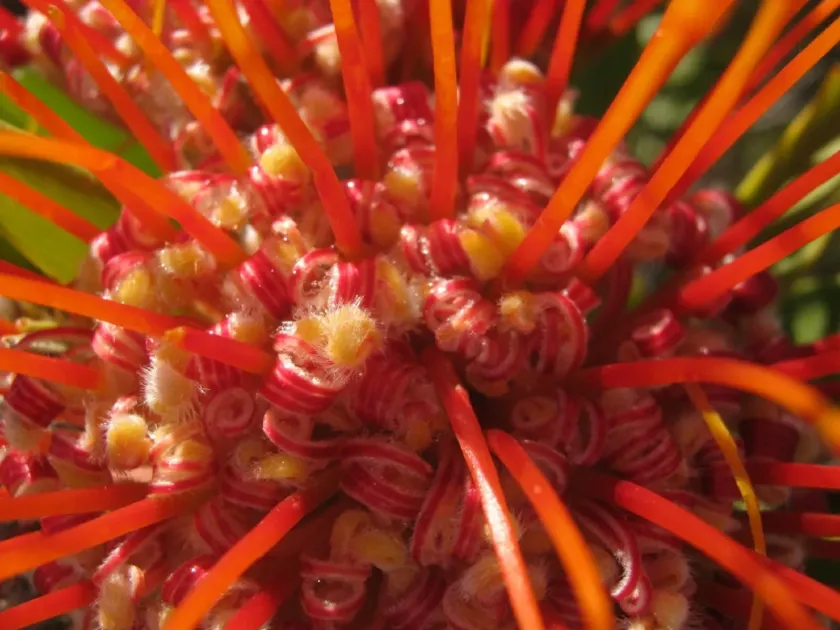
Description
Sowing dates
Leucospermum erubescens, belonging to the Proteaceae family, is a woody shrub that requires specific techniques for propagation. In commercial nurseries, it is typically propagated via semi-hardwood cuttings to ensure genetic consistency and reliable flowering characteristics.
Seed propagation is possible but challenging, often requiring smoke treatment or heat stratification to mimic the post-fire conditions found in its native South African habitats. This step is essential to break dormancy and ensure high germination rates.
The substrate for propagation must be extremely well-draining, typically consisting of a sand and perlite mixture. Low nutrient levels are essential in the early stages to prevent damping-off diseases, which are a major threat to seedlings.
Once rooted, young plants are hardened off in controlled environments before being transferred to their permanent outdoor or greenhouse locations. Careful root management during transplantation is vital to avoid shock and future root instability.
Planting density is dictated by the equipment used for maintenance and harvesting. A well-planned spacing allows for adequate airflow around each shrub, which is critical for reducing the risk of fungal pathogens in high-density plantations.
Growing requirements
This species is highly adapted to nutrient-poor soils and is famously sensitive to phosphorus. Soil pH should be acidic, typically between 5.0 and 6.0, to ensure proper nutrient uptake and prevent chlorosis in the foliage.
Leucospermum erubescens requires full sun exposure to thrive and produce high-quality blooms. Any shade will significantly reduce flower yield and weaken the structural integrity of the stems, making the plants less suitable for commercial markets.
Water management is the most critical agronomic factor. The soil must remain moist but never waterlogged; consequently, drip irrigation is the industry standard to maintain optimal moisture levels without promoting root rot.
Temperature control is essential, as the species is frost-tender. In cooler climates, cultivation must be restricted to climate-controlled greenhouses, as sudden temperature drops can cause irreversible damage to the vascular tissues of the stems.
Maintaining air circulation is a proactive measure against disease. In humid growing conditions, spacing and pruning must be optimized to ensure that foliage dries quickly after watering or rain, preventing fungal colonization.
Yield
Yield productivity follows a multi-year cycle, with the first commercial harvest occurring 2 to 3 years after planting. A mature, well-managed plantation can remain productive for up to a decade, provided that pruning protocols are strictly followed.
An individual, healthy bush can produce between 20 and 50 premium-grade stems per season. Quality is measured by stem length, the diameter of the pincushion-like flower head, and the uniformity of the bracts.
Post-harvest management of the bushes includes selective pruning to promote the development of new, vigorous stems. This regenerative pruning is the primary driver of consistent annual production in commercial settings.
Yield optimization is closely linked to the health of the root system. Avoiding excessive fertilizer application prevents salt buildup, which can otherwise cause stunted growth and significantly decrease the marketable yield per hectare.
Data-driven monitoring of crop health and flower development allows producers to predict harvest timing, ensuring that stems are cut at the exact stage of maturity required by international floral standards.
Main diseases and pests
Phytophthora root rot is the most devastating disease for this culture. It thrives in wet, poorly drained soils, making strict irrigation control and the use of sterile growing media the primary defensive measures for any farm.
Pests such as mealybugs and spider mites frequently affect the crop, especially in protected environments. Integrated pest management (IPM) is strongly recommended, as the plants exhibit high sensitivity to many harsh synthetic insecticides.
Botrytis, or grey mold, can colonize flower heads during periods of high humidity or poor ventilation. Removing infected plant tissue immediately is crucial to preventing an outbreak that could compromise the entire harvest.
Nematodes pose a hidden threat, attacking the roots and reducing plant vigor. Establishing a rotation plan and ensuring that the planting site has not been previously used for other susceptible crops are essential preventative steps.
Nutrient toxicity, particularly from phosphorus-rich fertilizers, often presents as a disease. By maintaining the specific, low-fertility soil requirements, farmers can ensure the plants remain naturally resistant to many secondary opportunistic pathogens.
Harvesting
Harvesting is performed manually once the flower heads reach the desired stage of maturation. The ideal timing is when the majority of styles are elongated and the flower has its iconic, pincushion appearance.
Careful cutting technique is paramount; stems should be harvested above a node to stimulate future branching. Sterile tools must be used throughout the process to prevent the spread of diseases from one bush to the next.
Immediately after cutting, stems should be placed in clean water supplemented with floral preservatives to maintain turgor and prevent bacterial blockage of the vascular system, which is essential for post-harvest longevity.
Temperature control post-harvest is critical. Stems should be cooled rapidly to a range of 2–5 degrees Celsius to minimize transpiration and metabolic degradation before they are packed for transport to domestic or export markets.
Proper packaging, including ventilated boxes to protect the flower heads from pressure and humidity, ensures that the product maintains its aesthetic value through international logistics chains.