
Wedge-leaf pincushion
Leucospermum cuneiforme (Burm. f.) Rourke
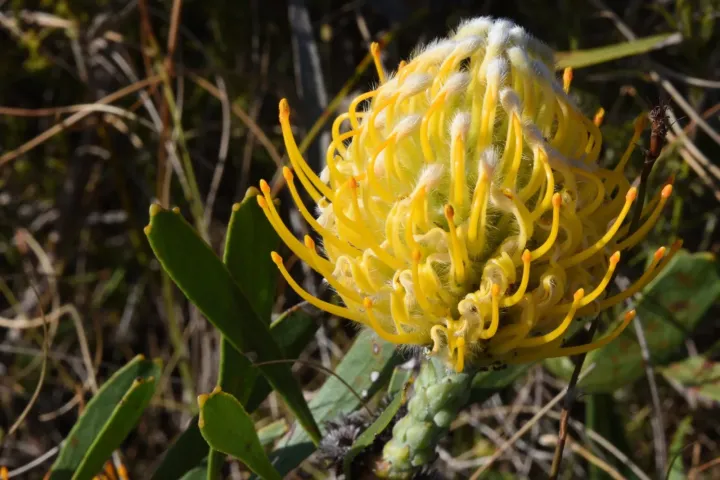
Description
Sowing dates
Leucospermum cuneiforme, a member of the Proteaceae family, is a slow-growing shrub typically propagated via seeds or semi-hardwood cuttings. Seed germination is naturally triggered by smoke treatments that mimic post-fire ecological conditions.
When sowing in a nursery, seeds should be treated with smoke water or specific primers to overcome dormancy. The sowing medium must be highly porous, acidic, and entirely free of organic compost or high-phosphorus fertilizers.
Cuttings are taken during the growing season from vigorous, healthy side shoots. After applying a rooting hormone, they are placed in a well-ventilated, high-humidity environment with a bottom heat source for optimal success.
The development of proteoid roots, which are specialized clusters of rootlets, is essential for the plant's nutrient uptake. Handling these root systems with extreme care during transplanting is critical for the survival of the seedlings.
Seedlings remain in nursery containers until they reach a robust stage, typically after several months. Consistent monitoring of the root zone health is vital during the early stages of establishment.
Growing requirements
This species thrives in nutrient-poor, sandy, or stony soils with a low pH. It is adapted to the harsh conditions of the South African fynbos, necessitating specialized soil management in controlled environments.
Ample sunlight is a non-negotiable requirement for Leucospermum. In greenhouses, supplemental full-spectrum lighting should be used if natural light levels are insufficient during the winter months.
Temperature management must emulate a Mediterranean climate, avoiding extremes. While the plant can tolerate cool temperatures, it is sensitive to frost and freezing, which can cause internal cellular damage.
Watering must be precise, as the species is highly susceptible to root rot. Irrigation water must be low in minerals and salts; tap water should be filtered or acidified to maintain the proper soil balance.
Adequate ventilation is crucial to prevent the accumulation of humidity around the foliage. Constant airflow inhibits the development of fungal spores, which can rapidly proliferate in stagnant, damp environments.
Main diseases and pests
The primary threat to Leucospermum cuneiforme is Phytophthora root rot, which is common in poorly drained substrates. Once established, this pathogen is extremely difficult to eradicate from the nursery setting.
Powdery mildew and various leaf spot diseases can occur if the humidity levels are not controlled. Regular inspection of the leaves and stems is necessary to identify early symptoms of these infections.
Scale insects and spider mites are common pests that attack plants under stress. Integrated pest management strategies, utilizing biological controls or light horticultural oils, are preferred over broad-spectrum pesticides.
Over-fertilization, especially with phosphorus-based products, is a major threat that causes toxicity in Proteaceae. Such imbalances lead to necrosis of the root tips and the subsequent failure of the entire plant.
Environmental stress, including irregular watering or insufficient light, weakens the plant's resistance. Providing optimal conditions is the best defense against both pests and secondary fungal outbreaks.