
Leucospermum lineare
Leucospermum lineare R. Br.
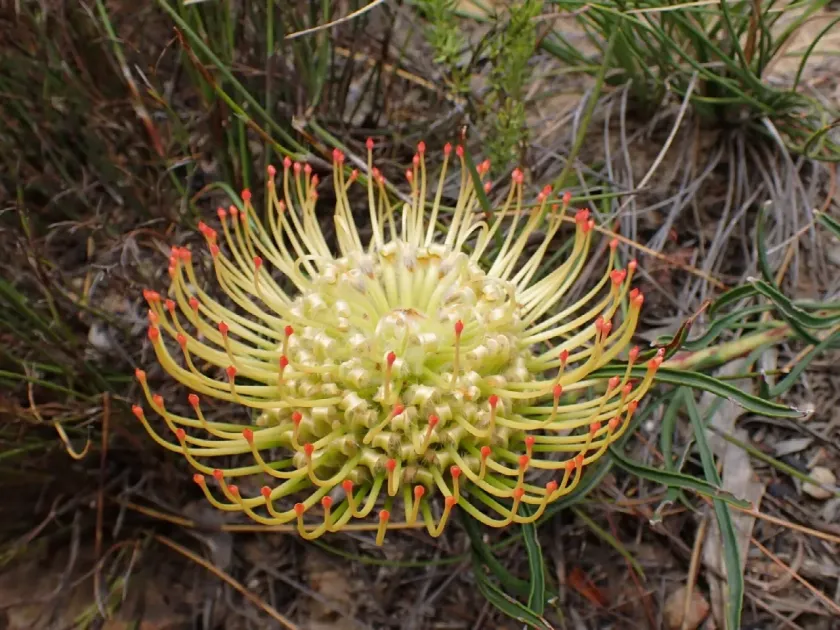
Description
Growing requirements
Leucospermum lineare is a distinct species belonging to the Proteaceae family, native to the Western Cape region of South Africa. It is a perennial evergreen shrub characterized by its narrow leaves and iconic pin-cushion style flower heads.
For successful agricultural production, these plants require well-drained, acidic, and nutrient-poor sandy soils. They have evolved in regions with low phosphorus availability, making them extremely sensitive to synthetic phosphate fertilizers, which can be fatal to the roots.
The climate requirements for commercial cultivation are specific: they thrive in Mediterranean-type climates with cool, moist winters and warm, dry summers. In regions with different climate patterns, protective structures are necessary to ensure plant health.
Agronomic management relies heavily on precise irrigation techniques. Drip irrigation is the preferred method to deliver water directly to the root zone while keeping the foliage dry to minimize the risk of pathogen outbreaks.
Pruning is an essential part of the cultural practice for L. lineare. Regular harvesting and corrective pruning after the flowering stage encourage lateral branching, which ensures a more productive crop in the following season and maintains the desired plant shape.
Main diseases and pests
Root rot, primarily caused by Phytophthora species, is the most significant threat to this crop. It is almost exclusively triggered by waterlogged soil conditions and poor air circulation around the root zone, often leading to rapid plant decline.
Common pests include mealybugs, scales, and mites, which can infest the dense foliage and flowers. Growers must utilize consistent monitoring programs to apply selective insecticides only when necessary to keep the exotic blooms of high market quality.