
Pincushion protea
Leucospermum cordifolium x Leucospermum patersonii
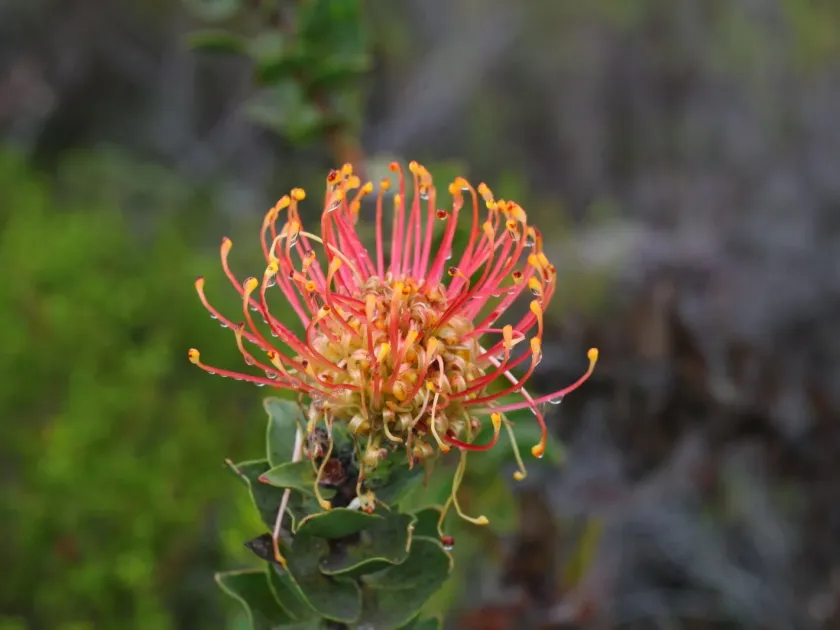
Description
Growing requirements
Leucospermum (Leucospermum cordifolium x L. patersonii), commonly known as pincushion protea, is a woody shrub in the Proteaceae family. It is a highly valued crop in commercial floriculture due to its unique, long-lasting blossoms.
The plant requires well-draining, acidic, and low-fertility soils. In native South African habitats, it thrives in sandy, nutrient-poor conditions. Farmers must avoid heavy soils that promote water retention, as root rot is a major risk.
Climatic requirements involve high solar radiation and protection from severe frosts. Optimal growth is achieved in Mediterranean-style climates where temperatures remain moderate throughout the year.
Irrigation must be carefully managed. The use of low-salinity water is critical, as high levels of salts or phosphates can be toxic to the plant's sensitive root system. Drip irrigation is the preferred method for commercial plantations.
The economic value of this crop stems from its extensive use in the cut flower industry. The robust nature of the stems and the aesthetic appeal of the floral heads make it an ideal product for international export markets.
Main diseases and pests
Phytophthora root rot is the most devastating disease for pincushion protea. It is primarily triggered by waterlogged conditions and poorly drained substrates, necessitating strict water management protocols.
Pests such as mealybugs, scale insects, and spider mites can infest foliage, especially in greenhouse environments. Integrated Pest Management (IPM) is strongly recommended to maintain plant health without damaging the ecosystem.
Botrytis cinerea (gray mold) can affect blooms in high-humidity conditions. Maintaining proper spacing between shrubs and ensuring adequate airflow are essential preventive measures for every producer.
Nutritional disorders, particularly iron chlorosis, are common when irrigation water has a high pH. Regular monitoring and pH adjustment are mandatory to ensure healthy leaf development.
The susceptibility to root-pathogens means that soil sterilization or using disease-free growing media is standard practice in successful professional operations.
Harvesting
Harvesting timing is critical for cut flower quality. Stems should be cut when the majority of the styles in the flower head have elongated, ensuring the inflorescence is sufficiently mature for longevity.
Professional harvesters use sterilized shears to prevent the spread of diseases. Only a portion of the stem length should be removed to ensure the plant retains enough photosynthetic surface area to regenerate.
Immediate post-harvest hydration is necessary. Stems are placed in water with floral preservatives to maximize their vase life before cold chain logistics take over for transportation.
Grading is based on stem length, head size, and color uniformity. Packaging must allow for good ventilation to prevent moisture build-up that could lead to fungal growth during transit.
Post-harvest pruning is performed to remove old flowers and stimulate the development of new, healthy shoots for the subsequent production cycle, ensuring sustainable yields over the years.