
Protea susannae
Protea susannae E. Phillips
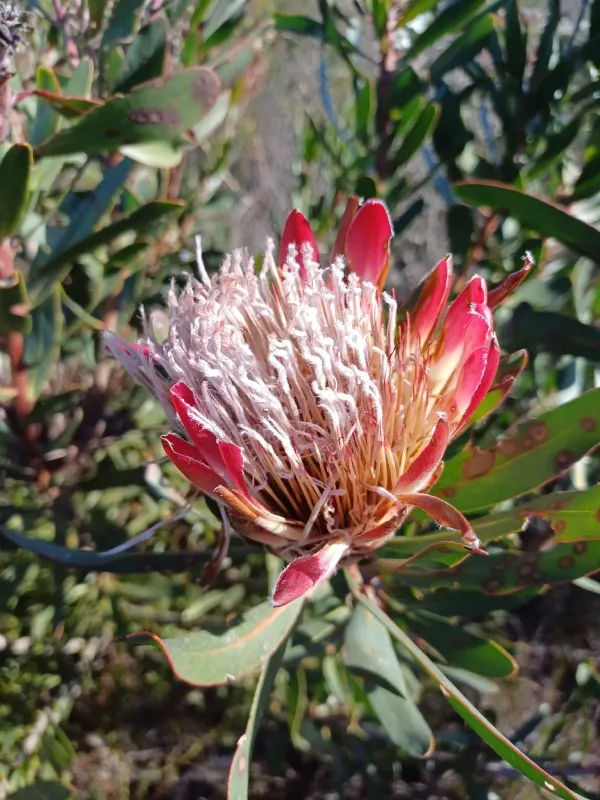
Description
Growing requirements
Protea susannae is a distinctive, evergreen shrub belonging to the Proteaceae family, native to the coastal regions of South Africa. It is highly valued in the international floral industry for its architectural structure and long-lasting, unique flowers.
The plant thrives in well-drained, acidic, and nutrient-poor soils. It is particularly intolerant to phosphorus, and application of standard balanced fertilizers can be fatal; therefore, specialized low-phosphorus feeds are required for healthy development.
Climatic requirements are specific: this species prefers a Mediterranean climate with mild, wet winters and warm, dry summers. It requires full sun exposure and excellent air circulation to prevent fungal pathogens from settling on its foliage.
Watering must be managed with extreme precision. The root system is sensitive to waterlogging, which often leads to lethal root rot. Irrigation should only be applied when the substrate has dried out sufficiently to prevent oxygen starvation in the roots.
When selecting a planting site, growers must ensure that the soil is not prone to compaction. Using a coarse, sandy-peat mix often provides the best results for commercial containerized or open-field cultivation of this species.
Main diseases and pests
Phytophthora root rot remains the most significant threat to Protea susannae. This soil-borne pathogen can wipe out entire plantations if drainage is poor or if the plants are subjected to frequent overwatering.
Pests such as mealybugs and spider mites frequently attack the plants, especially in greenhouse conditions. These pests hide in the dense bracts of the flower heads, making them difficult to control once an infestation is established.
Botrytis cinerea, or grey mold, can affect the flowers during humid weather. Maintaining adequate spacing between individual plants is essential to ensure that leaves and blooms dry quickly after rainfall or irrigation.
Boring insects can damage the woody stems, weakening the plant's structural integrity. Regular monitoring and the immediate removal of infested parts are necessary to prevent the spread of these pests throughout the crop.
Weed management should be conducted manually or through shallow mulching to avoid damaging the shallow, sensitive proteoid roots, which are easily injured by mechanical cultivation tools.
Harvesting
Harvesting of Protea susannae is a delicate process that requires selecting stems at the correct stage of bloom maturity. The ideal time is when the flower head has opened sufficiently, showing its characteristic vibrant color.
Tools for harvesting must be sterilized before use on each individual plant to prevent the potential transmission of systemic diseases. Clean, sharp cuts help the plant heal faster and reduce entry points for pathogens.
Post-harvest care involves immediate cooling of the harvested stems. Reducing the field heat is vital for extending the vase life of the flowers and maintaining their structural quality during transit to international markets.
Stems should be sorted by length and stem caliper, ensuring that all foliage that might sit below the waterline in a vase is removed. This prevents the rapid buildup of bacteria, which can cause premature wilting.
Storage of the cut flowers should be in a humidity-controlled environment with good ventilation to prevent moisture condensation on the bracts, which could trigger decay during the shipping process.