
Protea pudens
Protea pudens
Description
Growing requirements
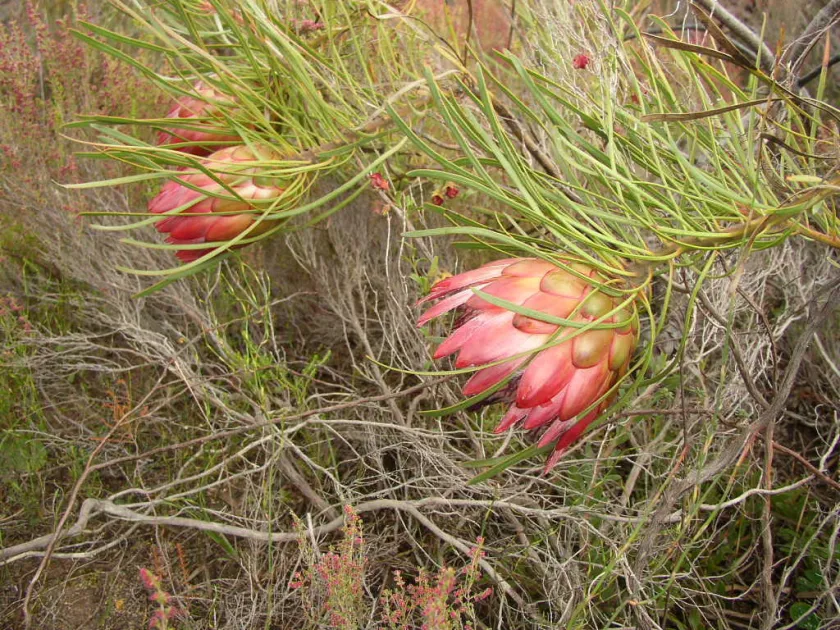
Protea pudens, commonly known as the shy protea, is a distinct species within the Proteaceae family, native to the Western Cape of South Africa. This small, woody shrub is distinguished by its unique habit of producing flowers at the soil level, making it a specialized ornamental crop.
In terms of climate, the plant thrives in Mediterranean-type environments. It requires significant sunshine and excellent air circulation to maintain plant vigor. High levels of humidity, if coupled with poor airflow, can lead to the rapid development of fungal pathogens.
The soil requirements are highly specific: Protea pudens thrives in well-drained, acidic, and nutrient-poor soils. It is vital to avoid soils with high phosphate content, as this species has adapted to extract nutrients from depleted soils and can suffer from toxicity if over-fertilized.
Cultivation practice involves careful container management. Pots must have multiple drainage holes, and the substrate should consist primarily of coarse sand or specialized protea mixes. Irrigation should be deliberate, ensuring the substrate dries slightly between waterings.
Propagation is typically done via seeds or cuttings in specialized nursery environments. Due to its sensitivity, growers must maintain a steady temperature, strictly avoiding frost, as the plant is not winter-hardy in temperate zones.
Main diseases and pests
The primary threat to the cultivation of Protea pudens is root rot caused by Phytophthora species. This fungus is highly lethal to proteas and is usually triggered by waterlogged, anaerobic soil conditions that suffocate the root system.
Pest pressures include infestations of scale insects and mealybugs. These pests attach themselves to the stems and leaves, feeding on plant sap and often leading to secondary infections by sooty mold, which impairs photosynthesis.
Spider mites are another common challenge, especially in indoor or greenhouse settings where the atmosphere may become too dry. These mites can cause extensive damage to the foliage, resulting in stunted growth and diminished blooming capacity.
Effective management requires a combination of strict sanitation and integrated pest management (IPM) strategies. Regular inspection of the undersides of leaves and stem nodes is essential for early detection of potential outbreaks.
Growers should exercise extreme caution when using chemical sprays, as the leaves and flower bracts of the protea are sensitive to certain solvents and chemical concentrations found in common horticultural pesticides.