
Protea compacta
Protea compacta R. Br.
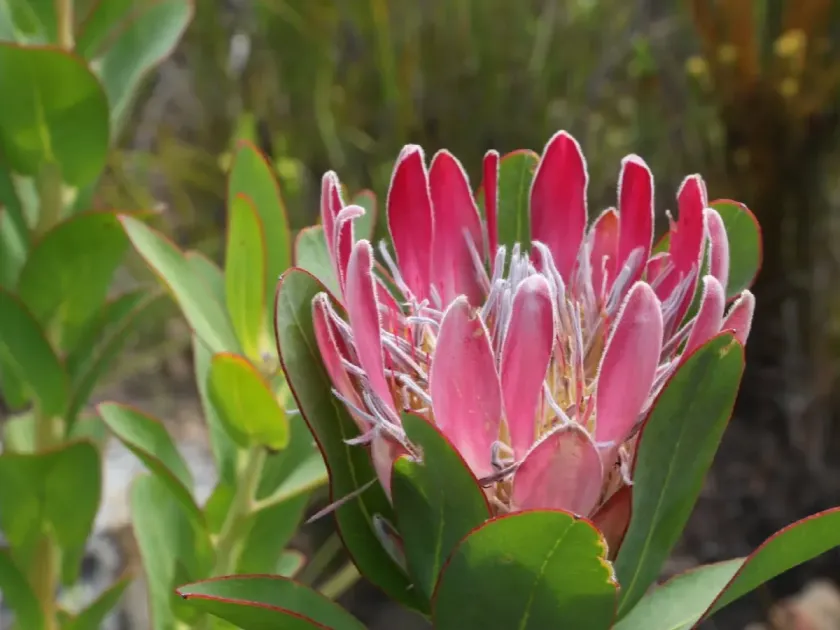
Description
Sowing dates
Propagation of Protea compacta is primarily achieved through seeds or stem cuttings, which are preferred for maintaining genetic consistency in commercial crops.
Seeds should be sown in a well-draining, acidic substrate composed of coarse sand and peat, ideally during the autumn or spring months.
For successful seed germination, a diurnal temperature fluctuation is necessary, mimicking the natural environmental conditions of the Cape Floristic Region.
Cuttings are harvested from healthy, semi-hardwood growth and treated with rooting hormones before being placed in a misting bed to maintain humidity.
Young seedlings and rooted cuttings require a gradual acclimation period before being transplanted into permanent field or greenhouse positions.
Growing requirements
Protea compacta belongs to the Proteaceae family and is native to South Africa, requiring high light intensity to thrive and produce blooms.
The soil must be well-drained, acidic, and notably low in phosphorus, as excessive phosphate can be fatal to plants in this family due to their specialized proteoid roots.
Climate management is crucial, as the plant prefers moderate temperatures and requires protection from hard frosts and extreme humidity.
Efficient air circulation is vital in greenhouse environments to prevent stagnant conditions that lead to fungal pathogen buildup in dense foliage.
Watering practices must be carefully calibrated to keep the soil moist but never waterlogged, ensuring oxygen reaches the sensitive root zone.
Yield
The primary commercial goal for Protea compacta is the production of high-quality cut flowers, favored for their durability and striking aesthetic appeal.
Yield capacity is closely linked to plant maturity; a well-managed bush in its prime years can produce significant quantities of marketable stems per season.
Productivity is enhanced through regular, strategic pruning that encourages lateral branching and the development of more flowering stems.
Grading standards for export focus on stem length, overall stem sturdiness, and the symmetry of the colorful bracts surrounding the flower head.
Proper harvest and post-harvest handling can extend the vase life of the flowers to several weeks, making them ideal for international floral trade.
Main diseases and pests
Phytophthora root rot is the most serious threat to Protea compacta, occurring frequently in poorly drained soils or over-irrigated conditions.
Powdery mildew can be a persistent issue in greenhouse settings where air humidity fluctuates significantly, requiring careful moisture control.
Pests such as aphids and spider mites can colonize the soft, young growth, necessitating the use of targeted integrated pest management strategies.
Preventative sanitation is key, involving the prompt removal and destruction of any diseased plant material to break the infection cycle.
Using selective, environmentally friendly pesticides is recommended to protect the health of the plants while ensuring compliance with floral safety standards.
Harvesting
Harvesting is performed when the flower bracts are fully developed and vibrant, but before the central florets have opened excessively.
Sharp, sterilized shears are used to cut the stems, leaving a sufficient portion of the plant to support future growth and prevent stress.
Flowers should be harvested in the early morning to ensure maximum tissue turgidity, which significantly improves the longevity of the cut stems.
Immediately after harvest, stems should be processed by removing lower leaves and placing them in clean water with a floral preservative.
Packaging must ensure the stems remain upright and adequately ventilated to prevent mold development during the transport phase to market.