
Protea aristata
Protea aristata E. Phillips
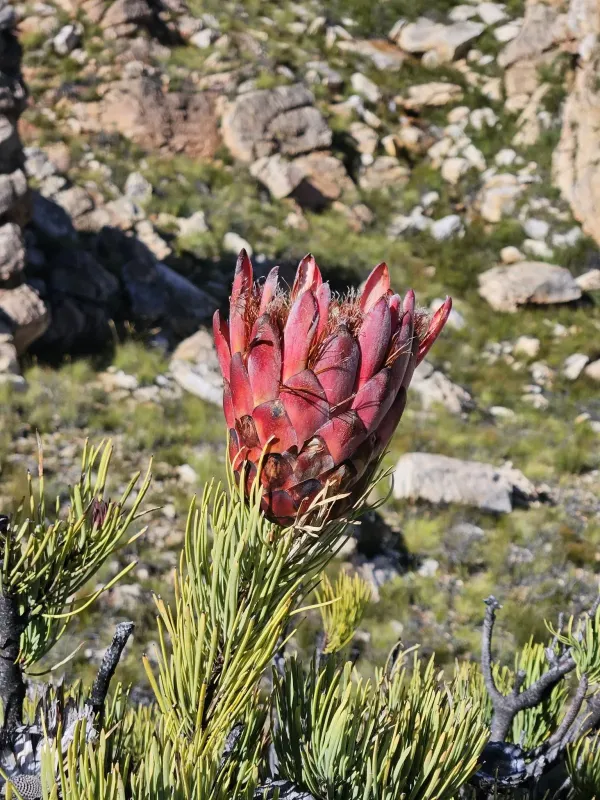
Description
Sowing dates
Propagating Protea aristata is primarily done via seeds, as vegetative propagation is notoriously difficult for this species. Sowing is typically performed during late autumn or early winter.
To achieve successful germination, seeds often require heat or smoke treatment, which mimics the natural fire cycles common in the fynbos biome where this species originates.
The growing medium must be highly porous and acidic, with very low phosphorus levels. Using sterile mix is crucial to protect the sensitive seedlings from soil-borne pathogens.
Once seedlings develop their first true leaves, they should be transplanted with extreme caution. The root system of this species is sensitive to disturbance, so using biodegradable pots is often recommended.
Establishing the young plants requires constant monitoring of temperature and light levels until the root system has sufficiently expanded within the pot.
Growing requirements
The culture thrives in well-drained, acidic, and nutrient-poor soils. High concentrations of phosphorus act as a toxin, causing rapid decline in the health of Protea aristata.
Full sun is essential for vigorous growth and flower development. Inadequate light exposure leads to spindly growth and failure to produce the signature floral heads.
Adequate air circulation is the most critical environmental factor to prevent fungal pathogens. Stagnant air and high humidity are major stressors for this plant species.
Watering requires a balanced approach. While the plants need consistent moisture, the substrate must be allowed to dry out slightly between waterings to prevent root rot.
Climate control should focus on avoiding extremes. The plant prefers mild temperatures and dislikes both heavy frost and sweltering, high-humidity heat.
Main diseases and pests
Root rot, primarily caused by Phytophthora species or poor drainage, remains the most significant threat to the longevity of Protea aristata plantations.
Mealybugs are common pests that infest the dense foliage of the plant. Regular inspection of the stem bases and leaf axils is necessary for early detection and control.
Spider mites may become a problem during periods of low humidity. Proper ventilation and periodic misting or humidity control can help suppress these infestations.
Fungal leaf spot diseases can develop if foliage remains wet for extended periods. Keeping the leaves dry and ensuring rapid air movement is the best preventive measure.
Maintaining high standards of farm hygiene, including the sterilization of tools and the use of healthy planting stock, significantly reduces the risk of crop loss.
Harvesting
Harvesting should be timed when the floral heads are fully developed but before the outer bracts have fully opened, ensuring maximum longevity in the vase.
Clean, sharp secateurs must be used to make precise cuts. This minimizes damage to the remaining plant structure and promotes healthy future growth cycles.
The harvested stems should be placed immediately into clean water. Commercial floral preservatives can be used to further improve the display life of the product.
Transportation of the harvested flowers requires temperature-controlled environments to maintain the structural integrity and aesthetic appeal of the protea heads.
Grading of the harvest is essential for commercial success. Stems are sorted by length, head diameter, and freedom from blemishes to meet premium market standards.