
Protea amplexicaulis
Protea amplexicaulis (Salisb.) R. Br.
Description
Sowing dates
Propagation of Protea amplexicaulis is primarily achieved through seed sowing or cutting. Seeds should be sown in a well-draining, acidic medium that mimics the nutrient-poor soils of the South African fynbos.
A crucial step in seed preparation involves smoke treatment, which significantly improves germination rates by breaking seed dormancy typical for this genus.
Cuttings should be taken from semi-hardwood stems during the active growing season. The use of rooting hormones is essential for establishing a robust root system.
Once rooted, seedlings must be handled with extreme care. The plant possesses proteoid roots, which are highly sensitive to soil compaction and mechanical disturbance.
Planting density should be managed to ensure adequate ventilation, which is vital for reducing the risk of fungal pathogens in both greenhouse and field production.
Growing requirements
Protea amplexicaulis belongs to the Proteaceae family. It is adapted to Mediterranean-style climates with cool, moist winters and warm, dry summers.
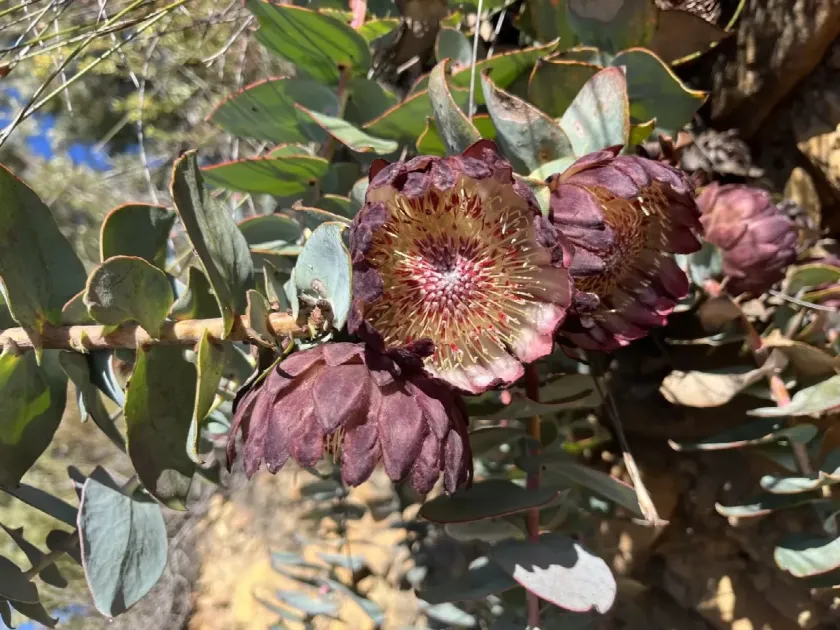
The plant requires full sun exposure to thrive and produce its unique, ground-level flower heads. Insufficient light results in poor structural development.
Soil requirements are strict: the pH must be acidic, and the drainage must be impeccable. Any waterlogging will lead to rapid plant decline and death.
Nutrient management is specialized. These plants are evolved to thrive in low-phosphorus soils; therefore, standard NPK fertilizers can be toxic to them.
Water quality is paramount. Irrigation must be performed with soft water, avoiding high levels of lime, which can alter the soil chemistry over time.
Main diseases and pests
Phytophthora root rot is the most significant threat to this species. It is encouraged by poor soil drainage and high humidity levels during the cooler months.
Pests such as mealybugs and spider mites are common in greenhouses, especially where air circulation is inadequate.
Management focuses on prevention through strict hygiene, optimal irrigation practices, and the use of integrated pest management strategies.
Fungicides containing copper should be used with extreme caution, as the species has shown sensitivity to certain chemical treatments.
Systemic monitoring for symptoms such as leaf yellowing or stunted growth allows for timely intervention, protecting the overall health of the crop.
Harvesting
The harvest of Protea amplexicaulis flowers is primarily intended for the cut flower industry, where they are valued for their unusual morphology.
Flowers should be cut when the bracts are fully developed but before the central florets have fully opened to ensure maximum vase life.
Harvesting tools must be sanitized between plants to prevent the transmission of soil-borne pathogens across the plantation.
Post-harvest care involves immediate hydration in clean water and storage in cool, well-ventilated conditions to maintain bloom quality.
Regular harvesting encourages plant vigor, though care must be taken not to remove more than a third of the foliage to maintain the photosynthetic capacity of the shrub.