
Protea magnifica
Protea magnifica Link
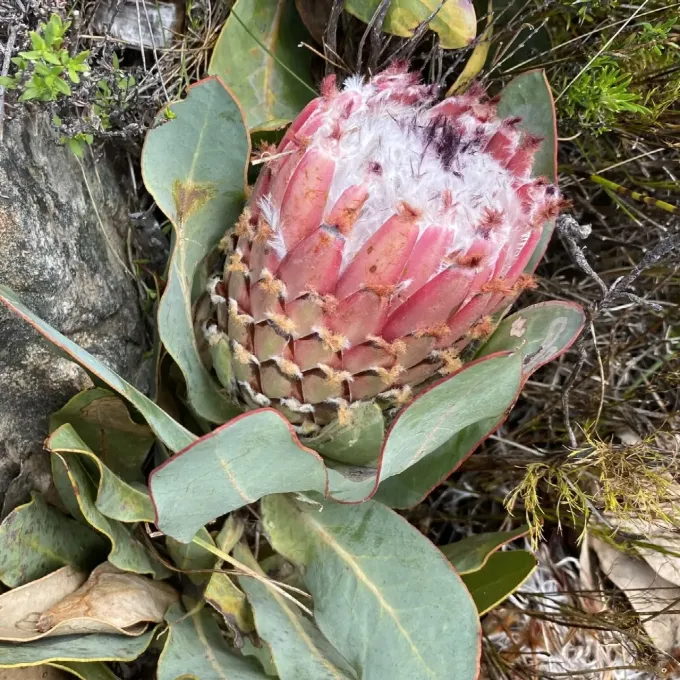
Description
Sowing dates
Seeds of Protea magnifica should be sown in late summer or early autumn to mimic the natural germination cycle of the South African floral kingdom.
The sowing medium must be highly porous and nutrient-poor, typically consisting of a mix of sand and peat moss with a low, acidic pH level.
To ensure high germination rates, it is common practice to treat seeds with smoke or smoke-based compounds to stimulate the natural physiological pathways.
Seed trays should be kept in an area with distinct diurnal temperature fluctuations, as this is a critical environmental trigger for the seeds to sprout.
Once the seedlings reach a certain size, they should be transplanted into individual deep containers to accommodate the rapid development of their taproot system.
Growing requirements
As a member of the Proteaceae family, this species requires specific growing conditions that mirror its natural Mediterranean-type climate.
The soil must have exceptional drainage properties; any accumulation of water around the root zone will lead to fatal root rot in a short period.
Full sun exposure is mandatory for healthy development, as low light levels will result in weak stems and a significant reduction in flower production.
Nutrient management is unique for this plant; it is highly sensitive to phosphorus, so fertilizers must be strictly low-phosphorus or phosphorus-free.
Optimal growth occurs at temperatures between 15°C and 25°C, with high ventilation being necessary to maintain healthy foliage and flower quality.
Main diseases and pests
The primary threat to Protea magnifica is the pathogen Phytophthora cinnamomi, which causes devastating root and collar rot in poorly drained soils.
Powdery mildew can infect leaves and bracts during periods of high humidity and stagnant air, requiring preventative measures and localized fungicide application.
Insects like mealybugs and scale insects pose a risk by sap-sucking, which leads to stunted growth and the colonization of sooty mold on the plants.
Root-knot nematodes are common soil-borne pests that can cause significant damage to the root architecture, ultimately leading to plant collapse.
Integrated pest management, including rigorous sanitation and crop rotation, is essential for maintaining the productivity of professional protea plantations.
Harvesting
Harvesting is typically done when the inner involucral bracts start to expand and the center of the inflorescence is visible but still compact.
Sharp, sterilized pruning shears must be used to ensure clean cuts, which help in preventing entry points for diseases into the remaining stem.
Post-harvest care involves immediate cooling of the stems to decrease respiration rates, which ensures the longevity of the flower in the distribution chain.
Careful handling is required during packaging to avoid physical damage to the delicate bracts that define the aesthetic value of the Protea magnifica.
Proper harvest techniques, combined with cold storage, ensure that these exotic blooms maintain their premium quality for several weeks in a vase.