
Protea rouppelliae
Protea rouppelliae Meisn.
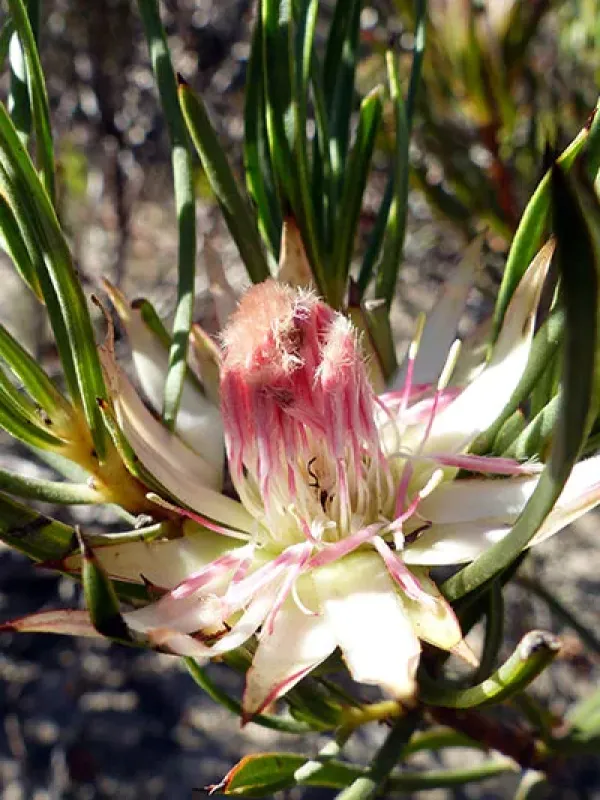
Description
Sowing dates
Protea rouppelliae is primarily propagated through seeds, as vegetative propagation via cuttings is notoriously difficult for this species. Sowing should ideally take place in late winter or early spring to allow seedlings to establish during the period of optimal growth.
To ensure successful germination, seeds require treatment that mimics natural post-fire conditions, often involving smoke-based compounds or heat treatment. Seeds should be sown shallowly, with a covering depth of no more than 0.5 to 1 centimeter.
A loose, well-draining substrate composed of acidic sand and peat is essential for sowing success. Maintaining consistent moisture in the germination tray is vital, though overwatering must be strictly avoided to prevent seedling damping-off.
Seedlings require a gradual acclimatization to direct sunlight and high-quality airflow. Transplantation into individual containers should be done carefully after the first few sets of true leaves have matured to minimize root disturbance.
Professional agronomists emphasize the use of sterilized media during the initial stages. This practice drastically reduces the incidence of soil-borne pathogens that can quickly destroy young, vulnerable protea plants.
Growing requirements
Native to the mountainous regions of South Africa, this species is adapted to significant temperature fluctuations and high UV exposure. The plant thrives in locations with full sun and good exposure to natural breezes.
Soil requirements are highly specialized: the medium must be acidic, extremely low in nutrients, and have superior drainage. Excessive phosphorus, often found in standard fertilizers, is toxic to protea roots; therefore, specialized low-phosphorus feeds are necessary.
Temperature management requires a balance between warm summers and cool winters. The plant is not frost-tolerant and should be sheltered or container-grown in regions experiencing freezing temperatures.
Proper irrigation is the most critical aspect of maintenance. Using soft, slightly acidic water is recommended, as tap water with high calcium content can alter the pH of the soil and inhibit nutrient uptake.
Excellent air circulation is non-negotiable. Stagnant, humid conditions are a primary driver of plant decline and are often the precursor to fungal outbreaks in both greenhouse and outdoor environments.
Main diseases and pests
Phytophthora root rot is the most devastating disease for Protea rouppelliae, usually triggered by poor drainage or overwatering. Once infected, plants typically decline very rapidly, necessitating strict sanitation.
Botrytis, or grey mold, can affect floral bracts and foliage during periods of high humidity or poor ventilation. Removal of decaying plant material and improved spacing are effective cultural controls.
Mealybugs are common pests that hide within the dense floral heads and leaf axils. Their sap-sucking activity weakens the plant and leaves behind honeydew, which encourages the growth of black sooty mold.
Aphids occasionally target new vegetative flushes and developing flower buds. While manageable with insecticidal soap or specific systemic treatments, chemical application must be handled with care due to the plant's sensitivity.
Effective pest and disease management relies on preventative measures, primarily maintaining a clean environment and ensuring that the plants are not subject to prolonged periods of wet foliage or damp, stagnant soil.
Harvesting
The harvest of Protea rouppelliae is focused on high-quality floral stems for the commercial cut-flower market. Harvesting occurs when the bracts are fully opened but the central floral mass remains tight and firm.
Harvesting should be conducted during the early morning hours when the plant is fully turgid. Stems must be immediately placed in clean water supplemented with professional-grade floral preservatives to extend vase life.
Post-harvest handling is delicate, as the bracts are brittle and easily bruised. Stems should be stored in a cool environment, ideally between +4 and +6 degrees Celsius, to maintain freshness during transport.
Pruning during harvest actually benefits the shrub, as it encourages the development of new, productive lateral shoots for the following season. Always use sterilized pruning shears to prevent the spread of infections between plants.
Yield is measured by the number of marketable stems per plant. With appropriate care and soil management, these shrubs can remain productive for many years, providing a consistent return for the professional flower grower.