
Protea obtusifolia
Protea obtusifolia H. Buek ex Meisn.
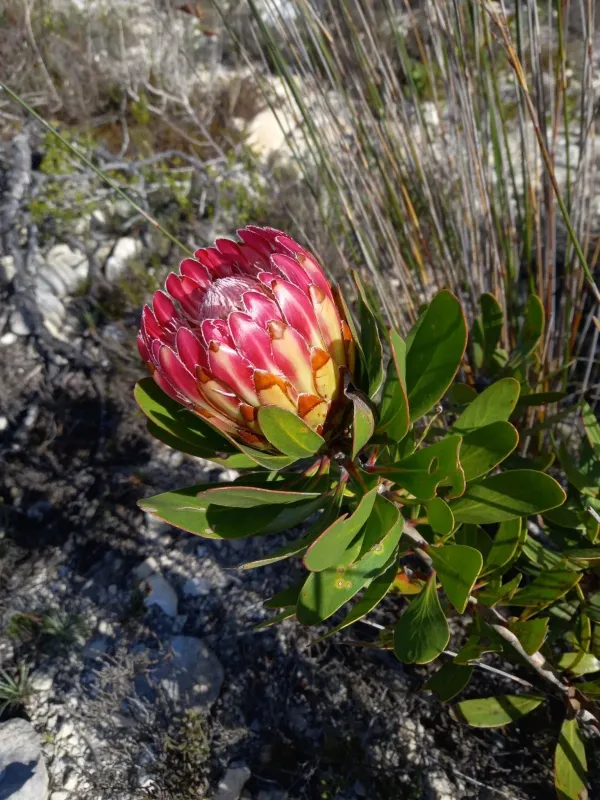
Description
Sowing dates
The propagation of Protea obtusifolia from seed requires conditions that mimic the natural fire-stimulated cycles of the South African fynbos. The ideal sowing time is during the autumn when temperature fluctuations between day and night are most pronounced.
Seeds should be sown in a well-draining, acidic, and nutrient-poor substrate composed mainly of sand and peat. Pre-treating the seeds with smoke or specialized smoke-priming solutions significantly enhances germination rates.
Seeds are sown at a depth of approximately 0.5 to 1 cm. It is crucial to maintain consistent moisture, but waterlogging must be avoided at all costs to prevent seedling damping-off during the germination phase.
As the seedlings emerge, good ventilation is essential. Protea roots are notoriously sensitive to disturbance, so using individual pots is highly recommended to avoid the need for early repotting.
Vegetative propagation via cuttings is a common commercial practice. Semi-hardwood cuttings taken in spring or early summer are treated with rooting hormones and placed in a mist-propagator for optimal root development.
Growing requirements
Protea obtusifolia, belonging to the Proteaceae family, is native to the coastal limestone fynbos of South Africa. This species thrives in full sun and requires high light intensity for vigorous growth and bud formation.
The plant is highly specialized and requires soil that is very low in phosphorus. Fertilizers containing phosphate can be fatal to the roots, as the plant has evolved to extract limited nutrients from nutrient-deficient soils.
Adequate soil drainage is non-negotiable. The plant prefers well-aerated, slightly acidic soils. Any water accumulation in the root zone will quickly lead to root decay and the death of the entire plant.
The climatic requirements include moderate temperatures. While it can handle light frost, it performs best in mild, Mediterranean-like conditions. In colder climates, cultivation must be restricted to greenhouses.
Air circulation is another critical factor. Stagnant, humid air creates a microclimate that encourages fungal pathogens. A well-ventilated space ensures healthy leaf development and robust blooms.
Main diseases and pests
The most significant threat to Protea obtusifolia is the Phytophthora fungus. This soil-borne pathogen targets the root system, causing rapid decline and plant death, often before symptoms become visible on the leaves.
Botrytis, or grey mold, is a common problem in humid environments, particularly attacking the large flower heads. Proper spacing and airflow are the best defense against this fungal infection in production.
Insect pests, including mealybugs and scale insects, frequently infest the plants. They thrive in the sheltered areas of the flower heads and axils, drawing sap and weakening the plant's overall immunity.
Nutrient toxicity, especially from over-fertilization, often presents as leaf chlorosis or tip burn. Regular soil testing is necessary to ensure the substrate remains within the optimal pH and nutrient range.
Integrated pest management, including biological controls and targeted systemic treatments, is the standard approach for maintaining the health of a commercial Protea crop.
Harvesting
Harvesting should be timed when the flower heads are fully formed and the inner bracts have begun to open, but before the central florets have fully matured and begun to produce significant pollen.
Stems are cut with sharp, sterilized shears. It is important to leave enough foliage on the plant to support future growth and prevent the bush from becoming overly stressed by the harvest process.
Post-harvest care involves immediate hydration. Stems are placed in clean, sanitized water treated with specific flower preservatives that prevent air blockages in the xylem and inhibit bacterial growth.
Grading is based on stem length, head diameter, and the aesthetic condition of the bracts. Only perfect, damage-free stems meet the standards for high-value export markets.
Storage and transit must occur at cool temperatures, typically between 5 and 8 degrees Celsius. This maintains turgor pressure and ensures that the Protea arrives in pristine condition for the end consumer.