
Protea hybrid
Protea neriifolia x Protea susannae
Description
Growing requirements
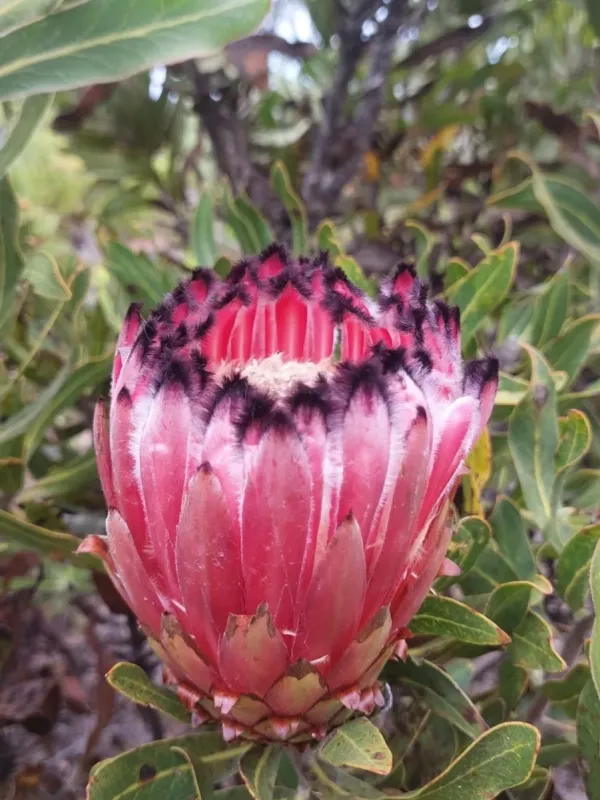
Protea neriifolia x susannae belongs to the Proteaceae family. This interspecific hybrid is a staple in the commercial floriculture industry, prized for the robust nature of the susannae parent and the stunning aesthetic of the neriifolia.
Originating from South Africa, this plant thrives in Mediterranean-like conditions. It requires well-drained, acidic soil with extremely low phosphorus levels, as the root system is highly sensitive to phosphorus toxicity.
Ideal temperatures range from 15 to 25 degrees Celsius. The culture is very susceptible to root rot caused by poor drainage; therefore, maintaining high porosity and aeration in the potting medium is crucial for health.
Exposure to full sun is essential for vigorous growth and proper flower development. In greenhouse settings, supplemental lighting may be used, but adequate spacing is mandatory to ensure constant airflow.
Fertilization must be strictly controlled using low-phosphorus fertilizers designed specifically for Proteaceae. Standard balanced fertilizers can cause severe leaf chlorosis and root damage to this specialized hybrid.
Main diseases and pests
The most severe threat to Protea hybrids is root rot caused by Phytophthora species. These soil-borne pathogens are often fatal, particularly in poorly drained or over-watered garden beds and containers.
Botrytis (gray mold) and powdery mildew can occur in high-humidity environments. Management includes strictly controlling humidity levels, increasing air circulation, and performing timely fungicide applications if symptoms appear.
Pests such as spider mites, scale insects, and mealybugs can infest the foliage and succulent stems. Regular monitoring is necessary to prevent these pests from spreading and causing structural damage to the plants.
Nematodes may also pose a risk in sandy soils. Using sanitized substrates and clean planting stock is the most effective defense against soil-borne pests that can devastate a commercial flower plantation.
Integrated pest management, including the use of biological controls and selective chemical applications, is recommended to keep the plants healthy without harming the beneficial organisms present in the system.
Harvesting
Harvesting should occur when the involucral bracts are fully open, but the central florets are still closed. This stage ensures the best vase life and market value for commercial cut flower distribution.
Stems are harvested using sharp, sanitized shears. It is vital to leave enough foliage on the plant to support ongoing photosynthesis, which aids in the rapid recovery of the plant after the pruning of flowers.
Post-harvest care involves placing the stems in clean, treated water immediately. This prevents air bubbles from entering the xylem and inhibits bacterial growth, which is the primary cause of premature wilting.
Grading is based on stem length and the uniformity of the flower head. The Protea neriifolia x susannae hybrid is highly sought after by designers due to its unique texture and durability in floral arrangements.
Proper cold chain management is required for long-distance transport to ensure the quality of the flowers. Keeping the stems at a steady cool temperature prevents respiration stress and preserves the freshness of the bracts.