
Long-leaved protea
Protea longifolia Andrews
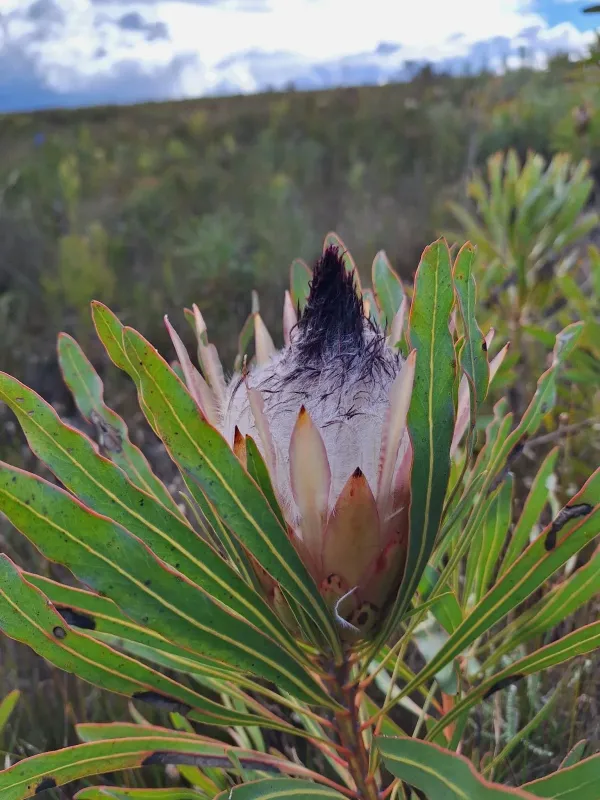
Description
Sowing dates
The propagation of the long-leaved protea (Protea longifolia) is primarily carried out via seeds or cuttings. Seeds should be sown in a well-drained, nutrient-poor substrate that mimics the rocky soils of their native environment.
Autumn is the optimal time for sowing, allowing the seeds to undergo natural stratification in cool conditions. It is critical to maintain moderate substrate moisture while avoiding waterlogging, which is lethal to young seedlings.
Using germination stimulants can significantly increase the success rate, as the seeds possess a tough, resilient coat. Once the first true leaves appear, the seedlings should be pricked out into individual containers.
Cuttings are taken in late summer, utilizing semi-hardwood shoots from the current season. The cuttings are treated with rooting hormones and planted in a sandy-peat mix under plastic cover to maintain consistent air humidity.
Young plants require cultivation in a protected environment for 1–2 years before transplanting to their permanent location. This ensures the necessary hardening of the root system and the development of sturdy stems.
Growing requirements
The long-leaved protea is an endemic plant from South Africa belonging to the Proteaceae family. It is adapted to a Mediterranean climate with dry summers and mild, moist winters, which dictates specific cultivation requirements.
For normal development, the crop requires sunny, open areas with minimal shading. Excess humidity in both air and soil, combined with low temperatures, often leads to root rot and plant death.
The soil must be acidic, extremely poor in phosphorus and nitrogen, and possess excellent water permeability. The use of traditional complex fertilizers is prohibited, as the protea is highly sensitive to excessive nutrient salts.
The temperature regime should be moderate. While the plant can withstand brief temperature drops, it is not frost-hardy, necessitating greenhouse cultivation in regions with harsh winters.
Root system aeration is a critical factor: soil compaction leads to rapid root die-back. Incorporating gravel or coarse sand into the planting pit is highly recommended to improve drainage efficiency.
Yield
The industrial yield of protea is measured by the number of marketable inflorescences produced per bush per season. Full-scale blooming generally begins 3–4 years after initial planting.
A mature bush can produce between 10 and 25 high-quality flower stalks suitable for cutting. Productivity depends on light intensity and the precision of pruning performed after the flowering cycle concludes.
The economic viability of the crop is ensured by the high market value of each individual inflorescence. Production is graded by stem length and flower head diameter, which determines the quality class for floristry markets.
To maintain high productivity, annual rejuvenation pruning is conducted to remove old or damaged branches. This stimulates the growth of new flowering shoots from the basal buds.
Yield also depends on the quality of the irrigation water, which must be soft, with low salt content and a stable pH level, achievable through professional filtration systems.
Main diseases and pests
The primary threat to the long-leaved protea is root rot (Phytophthora), which occurs when drainage is compromised or irrigation is excessive. This disease is difficult to treat, making prevention the primary method of control.
Among pests, mealybugs and spider mites are the most dangerous. They attack young leaves and flower buds, sucking sap and stunting the overall development of the plant.
The use of fungicides must be handled with extreme caution, as many preparations can cause phytotoxicity. An integrated pest management system, including humidity control and the use of natural predators, is recommended.
Soil nematodes can also damage the root system, reducing water and nutrient uptake. Management involves soil sterilization before planting and maintaining overall soil health to minimize stress.
Errors in management, such as excessive application of organic fertilizers, trigger fungal leaf diseases, which degrade the product's appearance and render it unsuitable for commercial sale.
Harvesting
Harvesting of inflorescences is conducted in dry weather, once the flowers reach the optimal stage of opening for transport. Harvesting too early or too late significantly reduces the vase life of the flower.
Cutting tools must be sharp and disinfected to avoid fungal spore contamination. The stem is cut above a node, leaving sufficient foliage to support the plant's continued metabolic processes.
Immediately after harvest, the flowers are placed in clean water supplemented with specific preservatives to delay senescence and bacterial growth within the stem base.
Storage is carried out at reduced temperatures (approximately +4 to +6 degrees Celsius) in well-ventilated rooms to prevent moisture condensation on the petals.
Transportation requires strict adherence to temperature regimes and careful packaging, as protea inflorescences, despite their apparent rigidity, are sensitive to mechanical damage during handling.